How to Translate Video Content at Scale in 2026
By SendBridge Team · Published Apr 09, 2026 · 10 min read · Tutorials
Translating a video used to mean calling in favors, waiting weeks, and spending money you didn't really want to spend. Half the time the dubbed version still felt off anyway. Flat delivery, weird pacing, mouth movements that didn't quite match. Most teams gave up and just slapped subtitles on it.
2026 is a different story. The tools available to translate video content today are genuinely usable in ways they weren't before. Not perfect, but close enough that teams who kept putting it off are finally making it work.
Here's what's changed, what still trips people up, and what's actually worth your time.
The Evolving Landscape of Video Content Translation
Here's some context on where things stand. About 68% of global businesses now use AI translation tools for their videos, with accuracy rates sitting between 95 and 98% across 100-plus languages. Five years ago those numbers would've seemed impossible.
The cost gap is what really changed things. Traditional dubbing used to be prohibitively expensive for most companies. Now platforms like Synthesia, HeyGen, Keevx, and Immersive Translate can handle the same work in minutes at roughly 15 times lower cost. That's not a rounding error. It's a completely different economic reality for anyone doing multilingual content.
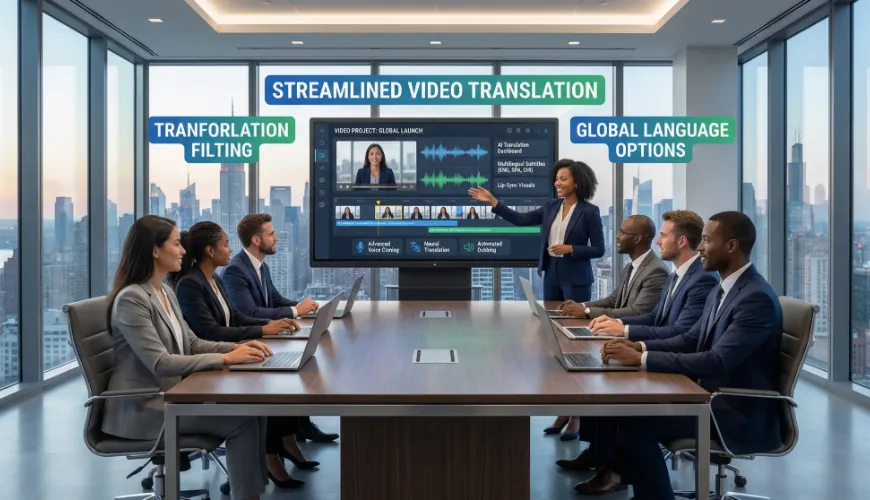
Under the hood, these tools chain together a few different technologies. First, automatic speech recognition pulls a transcript from your audio. Then neural machine translation converts it. Then text-to-speech with voice cloning rebuilds the audio in the target language. Finally, visual dubbing syncs the mouth movements. When each piece works well, the output feels native. Viewers don't get the sense they're watching something translated.
Key Challenges in Scaling Video Translation
None of this means it's a solved problem. Spend enough time with these tools and you'll bump into the same rough edges. The biggest ones include:
When it comes to transcription accuracy, even exceptional ASR (Automatic Speech Recognition) systems can falter when faced with heavy regional accents, noisy backgrounds, or scripts full of industry jargon. Although these systems can manage clean audio well, they often struggle in less-than-perfect conditions. This is why a human review of the transcript is typically necessary before it is used further or distributed.
Identifying the speaker and capturing the intended emotion of a piece is where things get really interesting. There's a significant difference between simply translating the right words and preserving the original's depth and emotional charge. Achieving this consistency in emotional tone across different languages is still hit-or-miss, even with top-notch tools.
Let's discuss audio-visual sync. Different languages vary in pacing, so sentences might get longer or shorter during translation. It's about more than just getting the words right; it's about syncing the dubbed audio perfectly with on-screen actions. Without precise timing, viewers can be quickly thrown off, breaking their immersion in the content.
Then there's the matter of cultural sensitivity. An English idiom that might fit perfectly in one context could turn into gibberish-or worse-when translated. Humor often suffers the most, but even the tone used with the audience or specific examples can require a careful, human touch to ensure the message lands as intended.
Lastly, cost management is an ongoing puzzle for teams handling large video libraries. Balancing budgets without sacrificing quality is a constant concern. A common approach is to use automated translation for general content while reserving professional dubbing for high-stakes material to maintain the right balance between budget and quality.
Emerging Technologies Revolutionizing Translation
The technology moving fastest right now is voice cloning, and it's worth understanding what that actually means in practice. A few key developments are changing what's possible:
Imagine a world where cloning a voice no longer means just imitating its main features. Today, voice cloning technology has become so advanced that it captures the intricate details, such as a speaker's subtle pauses before emphasizing a point, or the warmth in their voice on certain words. This matters tremendously for anyone trying to build a brand around a specific presenter because it means retaining the unique sound that listeners recognize and trust.
When it comes to lip-sync automation, we've come a long way from the awkwardly mismatched lip movements that plagued earlier dubbing systems. Now, thanks to newer visual dubbing technologies, the synchronization between mouth movements and audio is strikingly better. While perfection might still depend on face and language combinations, the improvements mean that viewers are less distracted by any inconsistencies.
Enter advanced neural text-to-speech (TTS) engines. These sophisticated systems now deliver voices in over a hundred languages that are incredibly hard to identify as artificial unless you’re specifically listening for it. This development provides a lifelike experience, making neural TTS not just a technical evolution, but a revolutionary step forward in how synthetic voices are perceived.
The MARS AI model is a game-changer in the realm of dubbing. Unlike older methods, it doesn't just translate words-it captures the performance style of the original speaker, transferring their personality into the dubbed content. This translates into a more cohesive and genuine listening experience, ensuring that the essence of the speaker is retained, while old models fell short of this nuanced task.

Building a Scalable Workflow for Video Translation
The workflow matters more than the tools in most cases. Teams that get good results have a clear, repeatable process. Teams that struggle are usually winging it. Here's what that process looks like:
- Prepare Finalized Video: Lock the video before you start. Any edits after translation begins create extra work that compounds fast.
- Select the Right Platform: Choose based on which languages you need and what file formats you're working with. Vozo, CAMB.AI, Synthesia, and HeyGen are all reasonable starting points.
- Transcribe Audio: Run the audio through ASR, then have someone check it. Not necessarily every word, but sections with names, product terminology, or anything domain-specific.
- Translate the Transcript: A bad transcript produces a bad translation no matter how strong the AI is downstream. For anything sensitive, add a human review on top.
- Subtitle or Dub: Dubbing has become the default for a lot of teams now that voice quality has improved. Subtitles still make sense depending on the platform and audience.
- Synchronize and Edit: Do a sync review after the platform handles the initial pass. Manual tweaks catch what automation misses.
- Review: Get a native speaker to watch it before anything goes out. Automated tools catch structural errors. Native speakers catch the sentence that's technically correct but sounds like it was written by someone who learned the language from a textbook.
- Export and Share: Export to your preferred formats and distribute.
Vozo supports 140-plus languages and consolidates most of these steps, which means less switching between tools mid-project.
Best Practices for Quality and Consistency Across Languages
The teams producing the best multilingual content treat localization like a discipline, not a checkbox. Here's what that actually looks like day to day:
When it comes to ensuring the quality of your content, there's one crucial step that you simply cannot skip: getting a native speaker to review your work. While automated tools are great for catching basic misspellings, they can't always recognize phrases that don't sound quite right to a native ear. It's that local touch that makes all the difference in how your content is received.
Speaking of tools, it's wise to invest in platforms that have proven themselves over time. Take Vozo for example, it not only offers reliable AI models but also allows for customizable review workflows. This can be a game-changer when you're trying to maintain quality while managing a growing volume of content.
Understanding your audience is another key factor in successful content localization. A video that resonates perfectly with viewers in North America might miss the mark in Southeast Asia. It’s not about changing the core information, but rather adjusting the emphasis and tone to suit regional preferences. That's what real localization is all about.
To avoid headaches down the line, think about translation early in your production process. By building translation into your schedule from the start, you can help ensure a higher quality final product and save yourself from the hassle of last-minute fixes. Teams that try to squeeze it in at the end almost always end up with more work and less-than-perfect results.
Lastly, maintaining consistency in terminology is essential. Compile a glossary of essential terms, including product names and technical vocabulary. This ensures that your brand language stays uniform across every piece of content, whether it's in the original language or translated into others. By doing so, you preserve the integrity and clarity of your message.
Future Trends and Opportunities in Video Content Translation
A few things seem pretty clear about where this is heading:
- Instantaneous Localization: Same-day multilingual launches are already realistic for many teams. That window will keep narrowing as automation improves.
- Voice Identity Fidelity: Voice fidelity will keep improving until the distinction between cloned and original barely registers. The next generation of neural voice models will make what we have now look rough.
- Integrated Compliance and Brand Safety: This will become a standard part of these platforms rather than a premium add-on. Companies can't afford localized content that drifts off-brand or creates regulatory problems in specific markets.
- Video Translation for E-Commerce and Education: Shoppable videos, course content, product explainers, all of it will be expected to feel native across languages.
Platforms like Vozo are already building toward this, investing in integrations with learning management systems and e-commerce infrastructure alongside the translation technology itself.
Frequently Asked Questions on Translating Video Content
What are the benefits of translating video content at scale in 2026?
You reach more people and spend a lot less doing it. Accuracy is sitting at 95 to 98% across 100-plus languages now. That used to be the kind of quality only big budgets could buy.
How do AI advancements improve video content translation?
Everything's in one pipeline now. Speech recognition, translation, voice cloning, lip sync. You're not managing five vendors. Most viewers genuinely can't tell the video wasn't recorded in their language, which would've sounded absurd to say five years ago.
What challenges still exist when scaling automated video translation?
Accents still cause problems. Emotional tone gets lost sometimes. Cultural stuff doesn't always cross over cleanly. You still need real people reviewing before anything goes live, no way around that.
What is the recommended workflow for translating video content at scale?
Finish the video first. Don't start translating a cut that's still changing. Transcribe, check it yourself, translate, review anything sensitive, add dubbing or subtitles, sync, then get a native speaker to watch it before you publish. That last step is the one people skip and regret.
Which technologies are shaping the future of video translation?
Voice cloning is moving fastest. MARS-style models carry over speaking style, not just words. Lip sync keeps getting better. The gap between "translated" and "originally recorded" is shrinking faster than most people expected.
How can I ensure translation quality and cultural accuracy in video localization?
Get a native speaker in before it ships, not after. Think about localization when you're writing the script, not when the video's already done. And remember, sometimes the message itself needs to change for a different audience. No tool figures that out for you.