How to Manage Roofing Projects Remotely in 2026
By SendBridge Team · Published Sep 29, 2026 · 10 min read · Technology
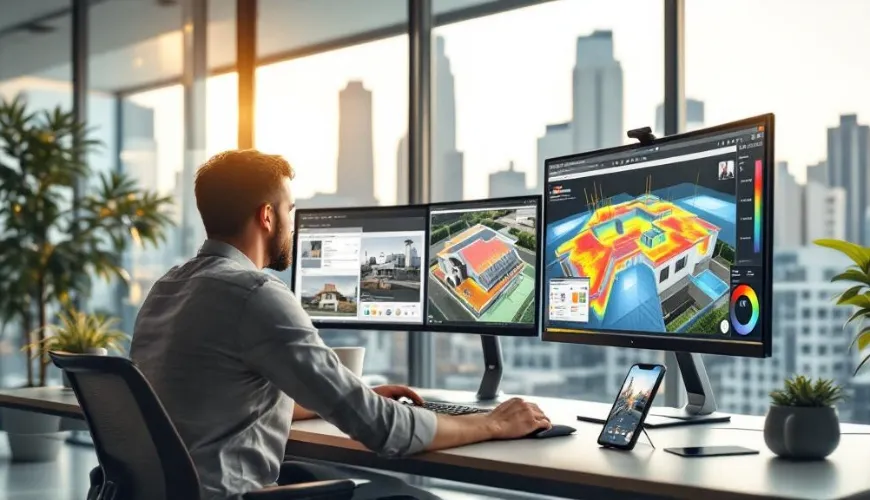
Effective remote management requires not only technology but also a mindset shift. The traditional model where a foreman visits all sites daily no longer works for companies wanting to scale. Instead, successful contractors need centralized control over all work stages - from initial inspection to final client report. Such systems provide visibility into the real status of each site without personal visits.
Documentation and Site Visualization
Photo documentation became the foundation of remote quality control. Brian Miller, owner of a Portland roofing company, introduced a mandatory rule: his foremen upload photos every two hours of the work shift. According to him, this reduced client complaints by 40%. The system works simply - workers use smartphones with GPS tags that automatically link images to specific addresses and times. Modern roofing project management software handles this photo documentation automatically, organizing images by project, date, and location without manual sorting.
Drones changed the approach to inspections. If previously examining a commercial building over 15 meters high required renting a lift and spending half a day, now a professional pilot with a DJI Mavic 3 Enterprise drone completes detailed filming in an hour. Thermographic cameras detect hidden insulation problems invisible to the naked eye. This proves especially useful for large complexes where traditional survey methods would cost tens of thousands of dollars.
Three-dimensional modeling becomes standard for complex projects. Software like Hover or RoofSnap creates digital roof models that can be rotated at any angle and demonstrated remotely to clients. One Texas contractor shared that his team closes deals via Zoom video calls, showing interactive visualizations of future work. Clients see not abstract drawings but realistic pictures of their updated roofs before work begins.
Communication with Distributed Teams
Instant messengers replaced phone calls as the primary communication channel. Slack or Microsoft Teams allow creating separate channels for each project where all participants - from manager to material supplier - can track progress in real time. This prevents typical situations where someone missed important information through an unanswered call. Using reliable hardware such as Devices for Teams helps ensure clear audio and video communication, especially for distributed teams working across multiple locations.
Video meetings extend beyond simple gatherings. Foremen now conduct virtual site walkthroughs when project managers are hundreds of kilometers away. A smartphone camera mounted on a worker's helmet streams live footage, enabling remote managers to provide instructions directly during complex operations. This practice reduced installation errors by 25% at Seattle Roofing Pros.
Digital task boards organize chaos. Trello or Asana show who's responsible for what and when deadlines fall. Instead of keeping dozens of details about different projects in mind, managers see the big picture on one screen. When a task completes, the card moves to the next status - everyone understands what's happening without additional questions.
Automating Routine Processes
Material ordering becomes faster through system integrations. When a manager approves a project, the program automatically calculates required quantities of shingles, membranes, and fasteners, sending orders directly to suppliers. ABC Supply and SRS Distribution already support API integrations with popular project management tools. This eliminates human errors in calculations that previously forced emergency purchases of missing materials.
Material ordering becomes faster through system integrations. When a manager approves a project, the program automatically calculates required quantities of shingles, membranes, and fasteners, sending orders directly to suppliers. ABC Supply and SRS Distribution already support API integrations with popular project management tools. To manage this process with professional-grade precision, many contractors are adopting dedicated construction purchase order software. This eliminates human errors in calculations that previously forced emergency purchases of missing materials.
Work schedules form automatically considering worker qualifications and site geography. The system knows John specializes in metal roofing and lives in the southern part of town, so assigns him to corresponding nearby projects. Algorithms even account for weather forecasts - if rain is predicted tomorrow, work on unprotected sites automatically reschedules.
Financial accounting synchronizes with actual progress. QuickBooks or FreshBooks receive data about completed work stages and automatically generate client invoices. No need to manually fill out invoices - the system sees waterproofing installation is complete and creates the corresponding document. Contractors receive payment faster because clients immediately see detailed information about completed work.

Quality Control Without Site Visits
Digital format checklists guarantee standard compliance. Before leaving a site, crews go through lists of 50-80 verification points, photographing each completed stage. The system won't allow closing a task until all points are marked. This methodology reduced repeat visits to fix deficiencies by 60% at Denver's RoofTech Solutions.
Sensors track critical parameters in real time. On large commercial sites, moisture sensors transmit data every 15 minutes. If readings exceed acceptable limits, managers instantly receive notifications and can respond promptly - even when physically located in another state. This matters especially for multi-month projects where fixing problems early proves easier.
Virtual inspections with client participation build trust. Instead of simply sending a work completion report, contractors organize video tours showing every detail of the new roof. Clients can ask to zoom the camera on any section and pose questions live. This approach creates a sense of involvement, though property owners may be in another country.
Training and Staff Development
Online courses make qualifications accessible. Platforms like Coursera or specialized industry sites offer certification programs on latest roofing technologies. Workers can study solar panel installation techniques on roofs in evenings after work, taking exams remotely. Companies that compensate such training costs get more versatile teams capable of executing more diverse projects.
Video instruction libraries preserve corporate knowledge. Experienced craftsmen record clips about typical operations - from proper cutting of ridge tiles to sealing ventilation penetrations. Newcomers watch these materials before first performing tasks, reducing error risks. Precision Roofing created a database of over 200 videos that became an internal university for young workers.
Virtual reality (VR) prepares for complex situations without risk. Simulators allow practicing work at height, experiencing realistic conditions through an Oculus Quest headset. Workers learn to move correctly on steep roof slopes using safety equipment, but falls in simulation have no real consequences. Statistics show companies with VR training have 40% fewer accidents.
Remote Risk Management
Weather condition monitoring became more accurate and prompt. Services like Weather Underground or Tomorrow.io provide hyperlocal forecasts accurate to specific streets. The system automatically alerts if storms or strong winds are expected in a site's area, giving time to evacuate equipment and secure temporary coverings. One Florida contractor saved materials worth $80,000 thanks to a notification 6 hours before an unexpected hurricane.
Insurance adapts to new realities. Desjardins Insurance and other companies offer policies with GPS tool tracking that reduce premiums by 15-20%. If expensive equipment gets stolen, the system shows its last location. Remote monitoring also allows insurers to process claims faster - inspectors can assess damage from photographs and video reports without personal visits.
Cybersecurity becomes a critical concern for roofing business. With transition to cloud systems, risks of client data leaks or corporate account hacks grow. Basic measures include two-factor authentication, regular password updates, and confidential document encryption. Ransomware attacks on average construction companies cost about $50,000 in downtime and system recovery, so prevention pays off a hundredfold.
Integration with Related Services
Surface cleaning contractors often work together with roofers. It makes sense to use pressure wash software for coordinating preparatory work when roofs need cleaning from moss or lichens before repairs. Schedule synchronization through a common platform prevents situations when roofing crews arrive but surfaces aren't ready yet. Such integration saves time and increases overall project efficiency.
Material suppliers open portals for direct access to their inventory management systems. Contractors see actual product availability in warehouses, reserve needed quantities of shingles in specific colors, and plan delivery for particular days. This eliminates phone calls and email correspondence when managers spend hours coordinating details.
Platforms for working with subcontractors centralize all contractual relationships. Jobber or its alternatives allow processing agreements, tracking work performance, and making settlements in one place. When main contractors need additional crews for large projects, they see ratings and reviews of different subcontractors, can compare prices, and hire the best candidates in minutes.
Project Financial Transparency
Real-time budgeting shows actual costs versus planned at each stage. Managers see that 75% of allocated material budget is spent though only 60% of work is completed. This signals reviewing suppliers or optimizing processes before it's too late. Previously such deviations appeared only upon project completion when fixing anything was already impossible.
Cryptocurrency payments begin appearing in the industry, though cautiously. Some large commercial clients offer Bitcoin or Ethereum settlements, especially for international projects where bank transfers cost expensively and take days. The BitPay platform allows accepting cryptocurrency with automatic dollar conversion, minimizing volatility risks. However, most contractors still prefer traditional methods due to regulatory uncertainty.
Profitability analytics help make informed decisions. Systems show which project types bring the most profit, which clients delay payments, and which always settle on time. Contractors can make strategic decisions to refuse small residential orders in favor of more profitable commercial contracts, backing choices with specific numbers.
New Level Client Service
Self-service portals give clients control over projects. Property owners log into personal accounts and see current work status, photo reports, remaining budget, and planned completion dates. They can leave comments or ask questions directly in the system without waiting for manager calls. Such transparency reduces client anxiety and questions like "when will you finally finish."
Virtual consultations expand business geography. A California contractor can consult a New York client via video link, show portfolios of previous projects, and provide preliminary cost estimates - all without any travel. If clients agree, local partners arrive for final measurements, but main sales work is done remotely. Contractors scaling across markets benefit most from pairing this remote capability with a dedicated roofing marketing agency - ensuring consistent lead flow into the pipeline that remote sales processes then convert.
Automatic surveys after work completion collect valuable feedback. Two weeks after site delivery, clients receive short questionnaires with 5-7 questions about work quality, communication, and overall impression. Responses get analyzed, and systems highlight problem areas. If several clients consecutively complain about untimely cleanup after work, managers see trends and take measures.
Environmental Aspects of Remote Work
Reduced travel decreases company carbon footprints. When managers don't drive daily to all sites, thousands of liters of fuel are saved annually. According to EPA calculations, average pickups consume 15 liters per 100 km - replacing part of trips with virtual inspections, companies reduce CO₂ emissions by dozens of tons yearly.
Accurate material planning reduces landfill waste. When programs calculate shingle needs with 98% accuracy, minimal surpluses remain. Previously contractors often ordered 20% extra "just in case," and these materials either cluttered warehouses or got discarded. Modern optimization makes the industry greener without additional effort.
Remote roofing project management is no longer an experiment - it's the new standard for companies striving to compete in the 2026 market.