How Mobile Businesses Are Winning Clients by Showing Up at Their Door
By SendBridge Team · Published Mar 03, 2026 · 7 min read · Sales
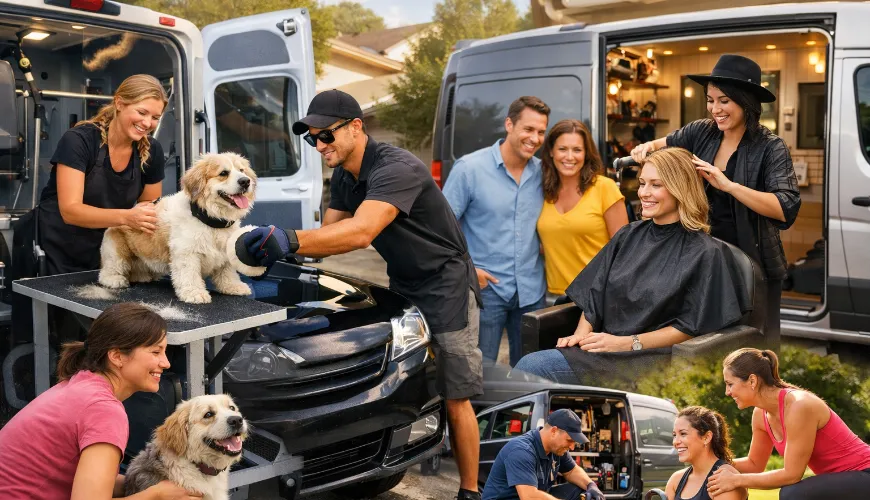
You have a packed schedule, a to-do list that never ends, and exactly zero interest in driving across town for an appointment. Now imagine the appointment comes to you instead. That is the promise of mobile businesses, and it is working. Whether it is pet grooming in the driveway or car detailing at the office, the companies that show up at your door are quietly winning customers from traditional brick-and-mortar competitors.
Here is how they are doing it and why this model keeps growing.
The Convenience Economy Is Driving Everything
If you've noticed more branded vans rolling through your neighborhood, you're not imagining things. Mobile businesses are exploding right now, and it all comes back to one word: convenience.
More people are looking for ways to make everyday tasks easier. According to a Morgan Stanley AlphaWise survey, 77% of U.S. consumers said convenience, meaning comfort, speed, accessibility, and availability, was a key factor in purchasing decisions. Consumers are even willing to pay around 5% more on average for products and services that simplify their lives.
That mindset shift has created a massive opportunity for businesses that eliminate the need for customers to go anywhere. Instead of waiting at a shop or scheduling around someone else's hours, you get the service on your terms, at your location, on your timeline.
Why Mobile Businesses Have a Built-In Advantage
The traditional service model asks customers to come to you. Mobile businesses flip that entirely. And that flip creates some serious competitive advantages that fixed-location businesses can't easily replicate.
- Trust factor: When a business physically shows up at your home, you meet the person doing the work and watch them deliver results in real time. That builds trust faster than any website ever could.
- Reduced friction: No commute, no waiting room, no juggling your schedule. For services like grooming, detailing, or wellness treatments, staying put while the work gets done is a massive selling point.
- Lower overhead: A well-equipped van is significantly cheaper than leasing commercial space, paying utilities, and furnishing a storefront. That means competitive rates with healthier margins.
Of course, making the jump to mobile means having the right setup. A proper van conversion for mobile business operations can make or break the customer experience. Professionals across industries are investing in purpose-built vehicle interiors that rival the quality of any fixed location.
The Industries Leading the Mobile Charge
Mobile business models aren't limited to one niche. They're thriving across dozens of industries, each adapting the "we come to you" approach to fit their specific service.
| Industry | What They Bring | Why Clients Love It |
|---|---|---|
| Pet grooming | Heated baths, dryers, grooming tables, and temperature control | Pets stay calm at home; owners never leave the house |
| Auto detailing | Pressure washers, water tanks, vacuums, pro-grade products | No losing the car for a full day at the shop |
| Mobile salons | Salon chairs, mirrors, lighting, and airflow control | Full salon experience without the storefront wait |
| Mobile mechanics | Diagnostic tools, portable lifts, parts inventory | On-site repairs without towing or shop drop-offs |
| Fitness training | Resistance bands, kettlebells, portable equipment | Personalized sessions at home on your schedule |
Some mobile groomers are pulling in $50,000 to $100,000 per year, and recurring appointments create built-in loyalty. Mobile detailers often charge premium rates for the convenience factor alone. The model works because it solves a real problem people are happy to pay for.

How Mobile Operators Build Loyalty That Sticks
Getting a customer once is one thing. Getting them to rebook month after month is the real game. Mobile businesses have a few built-in advantages when it comes to retention.
The personal connection is huge. When the same groomer shows up every six weeks and knows your dog by name, or the same detailer remembers your preferred interior cleaner, that's the kind of relationship a big-box competitor can't replicate. People stick with providers who make them feel recognized.
Scheduling flexibility matters too. Mobile businesses can offer early mornings, evenings, and weekend slots that fixed locations cannot because they are not tied to storefront hours. Then there's the referral engine. When a mobile business shows up in your driveway and does great work, your neighbors notice.
They see the branded van, ask questions, and suddenly an organic referrals start happening naturally. Pair that organic buzz with intentional strategies to increase sales in your service-based business, and you've got a growth loop that keeps the calendar full without constant ad spend. New customers keep coming simply because people notice the service in action.
What It Takes to Actually Pull This Off
Going mobile isn't as simple as throwing some gear in the back of a van. The businesses that succeed treat this like a real operation, because it is one.
- The vehicle: Whether it's a cargo van, a Sprinter, or a custom trailer, the workspace needs to be functional, organized, and professional-looking. Smart operators invest in shelving, power systems, water setups, and branding that turns their vehicle into a rolling billboard.
- Routing and scheduling: Efficient route planning means more jobs per day, lower fuel costs, and less downtime. Scheduling software that handles bookings, sends reminders, and tracks customer history is essential. Solid business messaging practices, including automated confirmations, follow-up texts, and rebooking reminders, keep no-shows low and repeat rates high.
- Local marketing: Google Business Profile optimization, neighborhood Facebook groups, and Instagram before-and-after content are all proven tactics. According to BrightLocal research, 86% of consumers read reviews before making a purchase decision, so collecting testimonials is non-negotiable.
- Licensing and insurance: General liability coverage, proper permits, and industry-specific certifications are required. Cutting corners here is a fast track to losing everything you've built.
The Numbers Back It Up
This isn't just a feel-good trend. The U.S. home services market is valued between $650 billion and $750 billion annually as of early 2025, according to industry analysis from BDR. The on-demand segment is growing even faster, with broader home service industry trends confirming the shift, projecting the U.S. online on-demand home services market will reach $3.64 trillion by 2030 at a 14.3% compound annual growth rate. Demand for at-home services keeps increasing every year.
For mobile entrepreneurs, the takeaway is clear. Demand is high, it is growing, and businesses that meet customers where they are will continue winning.
FAQs
What types of businesses work best as mobile operations?
Service-based businesses thrive in the mobile model. Pet grooming, auto detailing, hairstyling, mobile mechanics, and fitness training are among the most popular. Any service deliverable on-site with portable or vehicle-mounted equipment is a strong candidate.
How much does it cost to start a mobile business?
Startup costs vary widely. A basic mobile detailing operation might start at $5,000 to $10,000, while a fully equipped grooming or salon van can run $30,000 to $80,000 or more. The tradeoff is eliminating rent and many overhead expenses tied to a physical location.
Do mobile businesses make more money than traditional ones?
They can. Lower overhead means healthier profit margins on each job. The key is efficient scheduling, consistent rebooking, and charging appropriately for the convenience you're delivering.
How do mobile businesses find new customers?
Local marketing drives most new business. Google Business Profile optimization, social media content, neighborhood referrals, and branded vehicle wraps are the core strategies. Many operators also leave door hangers in neighborhoods where they've just completed a job.
Key Takeaways
- 77% of consumers say convenience is a key factor in purchasing decisions, and many will pay more for it.
- Mobile businesses win clients by eliminating the need for customers to travel, offering convenience that fixed locations can't match.
- Pet grooming, auto detailing, mobile salons, and wellness services are among the fastest-growing mobile industries.
- Personal connection and scheduling flexibility give mobile operators a built-in retention and referral advantage.
- The U.S. on-demand home services market is projected to hit $3.64 trillion by 2030, signaling massive growth ahead.