The Role of Email Automation in Modern Financial Administration
By SendBridge Team · Published Nov 21, 2026 · 8 min read · General
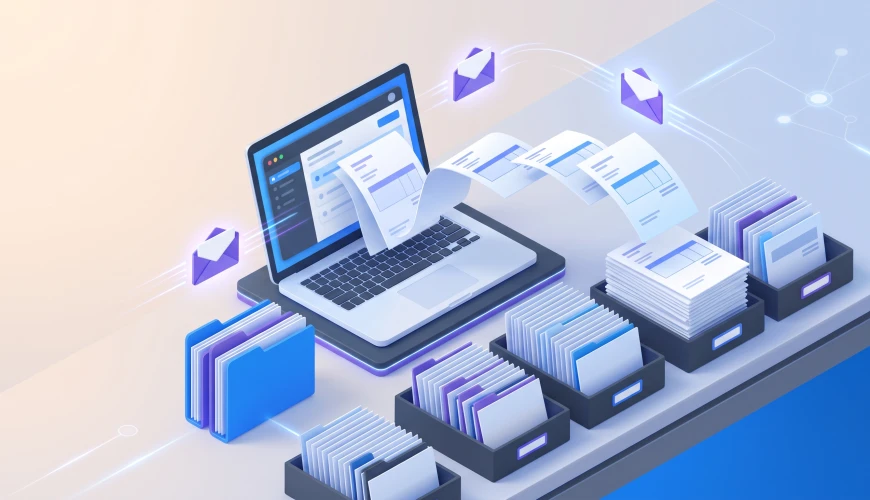
Financial departments must carry out many processes, including financial data reconciliation, payments management, invoicing, customer service, financial analysis, and so on. For organizations to keep accurate records and respond to financial management demands quickly, they must be capable of efficiently managing the increasing volume of financial transactions and communication, which can quickly exceed manually supported systems. Because of the essential communication role that email plays in most businesses, financial management processes are no exception. Financial systems must efficiently connect all parts of the financial process and the financial department must communicate with customers, vendors, external organizations, employees, and suppliers. Unfortunately, there is too much financial correspondence for financial management systems to rely entirely on manual messaging.
Efficient Invoice and Payment Processing
Perhaps one of the most visible financial management tasks is invoicing. Businesses must issue bills and payments, provide customers with transaction details, send statements, monitor past due balances, and deal with any billing concerns. With all communication carried out manually, there are significant time demands for the financial services department.
The answer is to automate invoicing. This includes the ability to automatically generate invoices and the flexibility to schedule invoicing runs for specified intervals or triggered events. Most automated invoicing processes begin with an order fulfillment step. The order completed invoicing stage will automate the preparation and delivery of invoices to clients and include all the pertinent documentation and information needed for prompt and complete payment.
Automated Payment Reminders
There are a lot of factors to managing accounts receivable, and sending invoice reminders isn't always the top priority of many businesses, but it is one of the most essential to steady cash flows.
With email automation, invoicing can become even more hands-off, leaving your financial team to manage payments. You can set the frequency and message depending on the invoice due date, including outstanding payment, due date, invoice references, payment options, and the option to schedule email follow-up. This will make customers more conscious of outstanding payment and help with your receivables management.
Personalized and Automated Customer Outreach
If invoices and payments are not fully integrated, some manual efforts are required, especially if disputes or issues arise. Customers expect a reply and more help on those issues and will reach out with emails. With automated email templates and sequences, you can address most customers with personalized replies and automated sequences. This allows the financial staff to pay closer attention to issues with delayed payment, disputes, or even legal matters, as more manual and personalized follow-ups will be required for more complicated issues.
Better Financial Records
Good recordkeeping is very important to make sure everything with finances is run effectively. Records of financial transactions, receipts, tax paperwork, bank statements, and bills of suppliers are all essential messages that should be recorded for future references. Unorganized recording of these items creates issues where everyone involved tries to locate items. With automated messages and expense management software, recording is made easier with systems that sort messages into files. It helps with organization of email and eliminates most of the confusion when customers are sending messages and there are multiple messages coming into several email boxes at once. This system allows for records of everything coming in to be made quickly.
Classification systems improve email recording and the systems used with email and accounting also allow for document systems. Customers should create clear systems and rules to ensure message tracking with important items and automated organization systems should be established, as well as a tracking of customers who used the organization. With systems used to record the financial data of customers, systems can automate message and file classification. For example, system users could create templates that automate document categorization for financial recordkeeping, including receipt management.

Fostering Positive Relationships with Clients and Vendors
As an important facet of financial administration, externally communication needs to be professional and consistent. This involves maintaining good relationships with stakeholders and clients, especially when financial transactions occur. Customers should receive clear bills with flexible ways to make payments, timely responses to financial inquiries, and easy ways to get support. Vendors, as well, need clarity and reassurance about the state of affairs for transactions with their orders. All of this can be addressed by automating emails. Automated messages can also be used for different reasons and send out updates about payments being processed. Automated email is effective because employees don't have to worry about composing individual messages.
A company's communications with their clients and other entities must be clear, concise, and helpful. These qualities will be even more critical when financial matters are being addressed. Having more tailored communications and better processes in place will prevent emails from being regarded as generic spam. Automating financial messages and personalizing the customer interaction has been shown to improve the customer's understanding of their own financial state. Also, organizations can further the personalized interactions by having customers and other stakeholder groups go through different workflow sequences depending on what they need. Customers are even better informed because their communication needs are met. This also results in a reduction of admin costs and overhead, resulting in increased profit.
Reducing Administration Costs
Most financial departments have many administration operations that can be automated, most notably emails. If financial processes can be simplified and even automated, departments can save valuable company money. It should be a business goal for almost all businesses to minimize as much administrative work as possible. Implementing automated financial processes also saves time for accounting departments, which then opens up their time to perform more valuable and needed operations. One of the main financial administrative operations is communication with suppliers and customers, which is the most prominent opportunity for automating emails.
Automation has been used by various businesses to achieve efficiency by replacing human work, especially for clerical operations such as invoice processing and mailing. Automation can even enable more efficiency when businesses scale operations. Email automation systems can operate continuously, based on scheduling, and help smaller businesses streamline invoicing without hiring more people to process transactions, as often happens in growth phases. Small businesses, especially, should be judicious in implementing automation and ensure they consider all factors. Costs of purchasing and maintaining automation, as well as the effort to get people to use the automation and system changes can erode the financial and time benefits of any automation solution.
Combining Automated Mail Systems With Financial Systems
Most organizations already utilize some accounting, Enterprise Resource Planning (ERP), CRM and document management software. Linking these to email automation can aid in establishing a seamless flow of activities within the administration of any business. One instance would be an accounting package generating an invoice followed by a payment gateway sending confirmation once the payment is completed. Furthermore, workflows can notify managers on when approvals are required for specific documents. These links assist in mitigating human effort of manually retyping data.
Automation tools should be decided after some planning is put into the existing processes. Identifying activities to be automated and designating individuals responsible for specific activities are also crucial. Compatibility with already owned systems, the availability of automation features and tools, report creation options, as well as security should be scrutinized while procuring automation software. Employees should be properly trained and be clear on when they can run automated systems and when they need to intervene. Organizations can implement some financial tasks at the initial stage and slowly expand more financial activities. Such gradual integration enables organizations to monitor performance and take correction actions.
Why Email Automation Is a Financial Game-Changer
These days email automation plays a significant role in financial operations of a company. Some of the benefits that company can enjoy include invoicing, collection reminders, document preservation, internal audits, and messaging company associates. When monotonous emails can be taken care of through email automation, people at a company can enjoy the time that was once spent doing emails and do other meaningful tasks that require thought. When there is integration between email automation and other operations that financial records have to undergo on a daily basis, company administration as well as customer service improve significantly. Though, all these can come with several disadvantages when security, error avoidance, integration issues, and staffing are not properly addressed. Email automation helps businesses set up systematic administration in several areas of the financial records, but especially helps financial officials spend most of their time working on budgeting, long term planning, etc.