How Businesses Can Reduce Operational Bottlenecks With Delivery Management Software
By SendBridge Team · Published Nov 21, 2026 · 8 min read · General
Delivering goods and services is important for most companies that serve either B2C or B2B markets. Increased customers can bring with them more expectations and an increasing number of orders, so having fragmented systems and manual operations is inefficient. Delayed orders and lack of clarity on shipments and deliveries can bring down efficiency and also drive up operational costs. Usually this is due to separate operations across the company without integration. Software can alleviate this by integrating all different systems and processes and automating transportation activities, improving communications, and tracking. Delivery software gives companies more flexibility to run a smooth process.
Recognizing Bottlenecks in Your Delivery Operations
There are different stages in any process and when there is a delay at one stage, there can be delays at subsequent stages. Let's take the order process for example. Packaging is done on time and the orders are ready, but there are issues in sending updated delivery instructions to dispatch. This delay in the first step is called a bottleneck and the issues tend to cascade across subsequent orders, thus impacting customer delivery. Delivery management software that allows businesses to track each step of their operations can pinpoint the issue, enabling businesses to either use resources efficiently or put procedures in place.
Managing Orders With Integrated Systems
There are too many steps to a single customer order and there are many people, including those who manage inventories and shipments, as well as customers, involved in the process. With too many disjointed systems and applications, staff have to keep transferring customer and order information. For most people, it leads to mistakes in order addresses and instructions. With software that connects order and customer information, there are less mistakes and better order fulfillment. Staff are better organized and work efficiently.
Better Route Planning and Customer Expectations
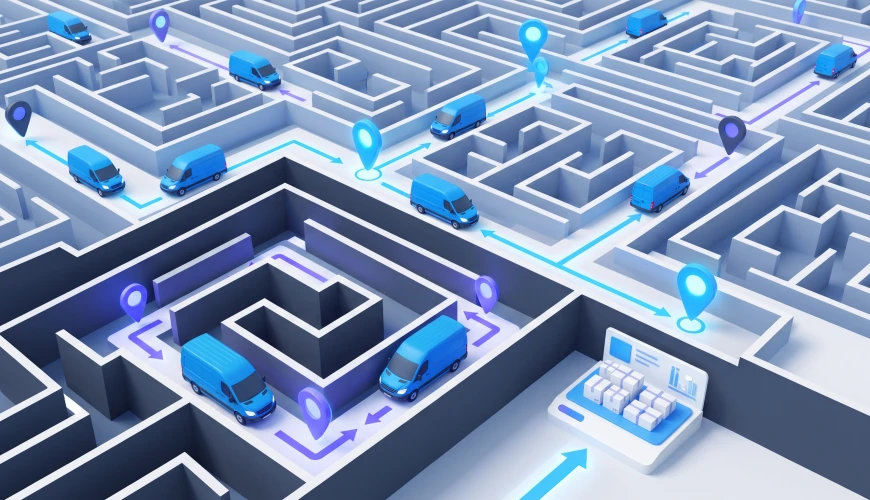
Routing can adversely affect the performance of delivery companies when they serve many customers with orders at multiple locations. Some routes may take more time than others due to traffic or distance. Unproductive route driving wastes money and increases the company's costs and the time needed to fulfill orders. In addition to losing time and fuel, poor routes cause delays and customer dissatisfaction. Delivery management software uses route optimization software to plan the optimal route based on variables like delivery address, traffic, delivery time, and the available volume on a delivery vehicle. The optimal route also plans against other wasteful events like unnecessary miles driven.
Because customer needs are subject to change over the course of a day, so too do routes. Drivers may receive late orders, cancellations, and/or disruptions due to weather and traffic. In addition, there may be customer service issues or delayed orders, which add complexity to the route. Route management can aid in flexibility by keeping dispatch updated on changing circumstances so they can then adjust drivers' routes as needed. If route management was not used, then a dispatcher would need to contact drivers individually. In addition, route management would help to analyze driver behavior over time to see what could be done to further improve delivery times and vehicle utilization.
Reducing Repetitive Administrative Tasks
These repetitive administrative tasks include things such as entering order details, planning delivery assignments, schedule creation, updates, and communication of instructions. If administrative work is manual, it increases the risk of errors, particularly when there is high demand for these tasks. It is also often repetitive and boring, taking employees' attention away from tasks such as communicating customer concerns or managing shipments. Delivery management software helps to address these issues. This software is designed to automate a significant number of administrative functions including those related to assigning deliveries, updating status, dispatching notifications, and document proof-of-delivery. With administrative software, employees can manage large workloads without an increase in staffing resources.
Using automation eliminates the inconsistency of multiple message transmissions across the firm's departments. For example, once an order gets dispatched to a driver, employees of other departments need to communicate this information again via multiple messages. Instead of this, information can be made available centrally through the system. Delivery information also gets captured and made available for employees. Warehouse and other dispatch operations get a streamlined version of delivery updates, eliminating redundant customer updates. Consistent business practices are much better than practices that change from day to day and make business more vulnerable during fluctuating busy periods.

Improving Internal Communication
Better coordination of orders becomes crucial in fulfilling delivery obligations when multiple business departments and more than one employee are involved. Dispatch teams have to arrange driver coordination, warehouse teams need to complete orders for shipments, and customer service teams have to deal with inquiries. Tracking delivery status gets more complex when employees primarily communicate over the telephone, emails, and messaging tools. Information and instructions get lost. Delivery management tools improve the coordination between employees and help bridge the gap in communication and delayed activities.
Clear communication between driver and dispatch personnel becomes more important with transportation operations often carried out outside the company's premises. Drivers need to access updated delivery address, delivery instructions, customer contact information, and delivery schedule. Using delivery mobile applications, drivers do not have to rely on dispatcher's routines. Drivers can use mobile applications to record progress and problems. This also helps dispatch teams track activities.
Improving Delivery Tracking and Records
Businesses often struggle to diagnose the root cause of issues in their delivery systems before customers or other operations feel the pain. Without accurate tracking, a business's employees cannot know if shipments have even been picked up, are on their way to customers, or have been held up. Lack of visibility also results in countless calls and inquiries, leading to wrong answers about deliveries. Many businesses can eliminate this tracking problem using delivery management systems, because there are more advanced systems available that can be integrated with other systems to track deliveries in real time or close to real time. Businesses can then proactively check the status of deliveries, diagnose tracking issues, and manage shipments on their terms.
More accurate tracking information can help improve customer service. Customers like to have clear answers about when they can expect deliveries. Any uncertainty can be detrimental to the customer service experience. Employees can easily give customer updates if they are integrated with delivery systems. Dispatch personnel do not need to repeatedly contact drivers or help customers guess. Customers can receive more accurate updates as delivery milestones occur with automation, and electronically capturing proof-of-delivery details, such as a picture, can assist employees in solving delivery disputes and can improve accountability across the supply chain.
Managing Resources and Reducing Costs
Operating a business successfully requires delivering items with resources. For example, if there are staffing shortages and driver loads are unequal, deliveries can be delayed even if total staffing numbers appear sufficient. With delivery software, managers gain visibility of delivery workloads. If delivery routes can be better planned and vehicle capacities considered, more resources can be used to meet delivery demands. As a result, companies can more efficiently employ their resources.
With operational data, businesses can understand where to control costs and eliminate wasteful delivery spending. Historical delivery data can predict how much help a business will need during certain periods of time to plan and save even more delivery costs. Delivery services can be reliable even as delivery expenses are lowered.
Expanding and Scaling the Business
Operating with a smaller workload becomes simpler and less cumbersome compared to when more deliveries start coming in. This includes everything from order entry and scheduling to invoicing, as well as tracking multiple stops and deliveries on the go. Manual coordination of daily deliveries through multiple people starts becoming more complicated. It helps to use a system that enables the business to be better organized. This includes automation and templates as well as centralization of information.
As the company moves to service new delivery markets and starts to expand, consistency of service must be maintained. There may be many people who are involved with delivering the services as the delivery business expands and coordination gets much more complicated. This becomes easier with a platform to organize the deliveries and coordinate many people while providing more transparency for the entire delivery process.
Software designed with scalability in mind must be utilized. Systems designed for order and inventory management can be integrated with enterprise planning systems. This enables coordination of order management and inventory across several departments of the organization. There must be systems and software designed with a flexible architecture so as to avoid costly replacements with every iteration.
Scaling Delivery Operations With Better Systems
These bottlenecks can creep into any part of delivery, from preparation and dispatch to transportation and final delivery. This is most frequently caused by poor route planning, tedious administrative processes, disconnected systems, and the inability to track deliveries. Delivery management systems help businesses with this, because they give more visibility into delivery performance by enabling companies to do everything on a central system. Delivery management systems give business more agility and foresight to adjust for unexpected circumstances, so that they can provide high service even in times of demand. Implementing a system like delivery management gives business long term efficiency and supports future growth.