The Rise of AI Music Video Creation: When Your Laptop Becomes a Full-Blown Music Studio
By SendBridge Team · Published Jun 23, 2026 · 7 min read · Technology
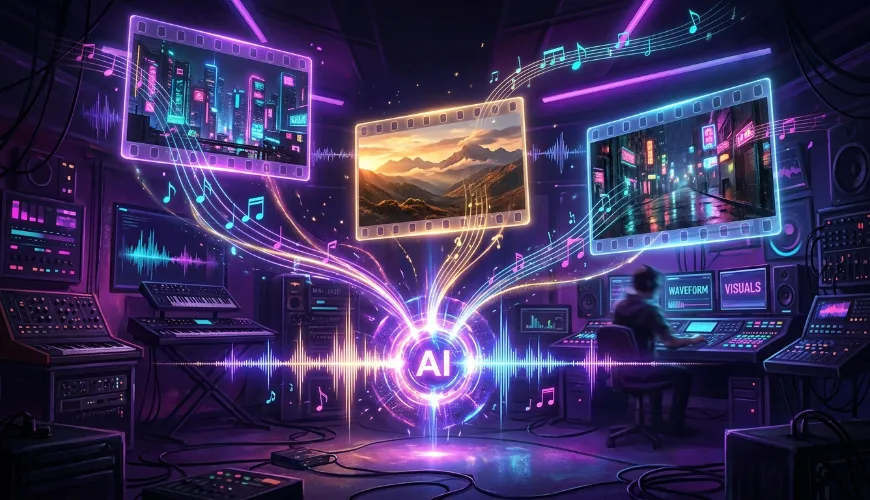
There was a time when making a music video meant a camera crew, a rented studio, a director yelling "one more take," and someone holding a clipboard pretending to know what "cinematic lighting" means. Fast forward to today, and the process looks more like: you upload a track, type a few prompts, sip coffee, and let AI do the emotional heavy lifting.
Welcome to the era of AI music video generation-where creativity is no longer limited by budget, camera equipment, or the availability of your most unreliable band member.
What's especially interesting is that AI tools are no longer just "helpers." They're becoming full creative partners. They analyze rhythm, interpret mood, and even decide whether your song feels like a neon cyberpunk city chase or a slow emotional walk through a rainy street at 2 a.m.
Among the growing ecosystem of tools, platforms like Yolly AI are pushing this transformation forward, offering systems that don't just generate music or visuals separately-but merge them into one synchronized storytelling engine.
And that's where things start getting really interesting.
The Shift: From "Music Tools" to "Storytelling Machines"
AI music tools used to be simple: generate a beat, loop a melody, maybe throw in a drum pattern that sounds suspiciously like every lo-fi playlist on YouTube.
But the new generation of tools has changed the game entirely. They don't just create sound-they interpret emotion.
Think about it like this:
- Old tools: "Here's a beat. Do something with it."
- New AI systems: "This song feels nostalgic, slightly bittersweet, and would look great with golden-hour lighting and slow-motion city shots."
That jump is massive.
And it's exactly why AI music video generators are becoming so popular. They don't just automate production-they automate imagination.
Now let's look at two standout tools in this space that show how far things have evolved.
AI Song Generator: When Your Ideas Become Instant Soundtracks
If you've ever had a moment where you thought, "This idea in my head would make a great song," only to immediately forget it 12 seconds later while opening Instagram, then AI music tools are basically here to rescue you from your own attention span.
The AI Song Generator is built for exactly that kind of chaotic creativity. Instead of requiring deep technical knowledge of music theory (or the patience to learn what a "minor seventh chord" is), it translates simple inputs into fully structured music tracks.
Turning Random Thoughts into Real Music
What makes this type of tool so powerful is how low the barrier to entry becomes. You don't need to be a producer-you just need an idea.
You can describe something like:
- "A dreamy pop track that feels like summer at night"
- "A dramatic orchestral build for a short film trailer"
- "A chill electronic beat for studying but also questioning your life choices"
And the system responds with a fully formed composition.
But here's where it gets even more interesting: it's not just generating sound-it's shaping emotional direction. The AI interprets mood, tempo, and style like a human producer would, except it doesn't take smoke breaks or argue about snare drum volume.
Why It Matters for Creators
For content creators, marketers, indie filmmakers, or even people who just want background music for TikTok videos, this changes everything.
Instead of searching endlessly through royalty-free libraries hoping to find "something that fits," you generate exactly what you need.
It's like switching from grocery shopping to having a personal chef who reads your mind-but for music.
And once you have the audio, the next logical question becomes: "Okay… but what does this look like?"
That's where video generation enters the stage.

AI Music Video Generator: When Sound Becomes a Visual Experience
If AI Song Generator is the composer, then the AI Music Video Generator is the slightly dramatic film director who insists every shot needs "more emotional depth."
The AI Music Video Generator takes your audio and turns it into a synchronized visual narrative. It doesn't just slap random clips together-it interprets structure, rhythm, and mood to build a coherent visual story.
How It Thinks (In a Very Non-Human But Somehow Creative Way)
The process usually works something like this:
- The AI analyzes the track's tempo and beat structure
- It identifies emotional shifts (calm > tension > climax > resolution)
- It maps visual themes to those shifts
- It generates scenes that align with both rhythm and mood
So if your song suddenly drops into a heavy bass section, the visuals might shift into glitch effects, fast cuts, or dramatic lighting changes.
If the chorus hits with emotional intensity, expect cinematic slow-motion scenes, glowing highlights, or wide landscape shots that scream "this is the part where the protagonist realizes everything."
The Fun Part: It Sometimes Feels Weirdly Accurate
One of the surprising things about AI-generated music videos is how often they feel right, even when you can't fully explain why.
You might get:
- A futuristic cityscape that matches your electronic track perfectly
- A nostalgic montage for a soft acoustic guitar piece
- Abstract visual storytelling for experimental sound design
It's not random-it's pattern recognition applied to creativity.
And for creators who don't have access to production teams, editors, or animation budgets, this is a massive shift. Suddenly, visual storytelling becomes accessible to anyone with a song.
The Real Power: When Audio and Visual AI Work Together
Individually, AI music generators and AI video tools are impressive.
But together? That's where things start to feel like a full production studio inside your browser.
Imagine this workflow:
You generate a song using AI > instantly feed it into a video generator > receive a fully synchronized music video > adjust mood with a few prompts > export a final version ready for YouTube, TikTok, or client delivery.
No cameras. No editing software marathon. No "why is this render taking 7 hours?"
Instead, you're working in something closer to a creative conversation than a production pipeline.
And that's the key shift happening right now: creation is becoming iterative, not technical.
You're no longer "building" a music video in the traditional sense. You're directing it.
Why This Trend Isn't Just a Fad
It's easy to assume this is just another wave of AI hype, but the direction is pretty clear.
Three major shifts are happening:
1. Creativity is becoming conversational
Instead of mastering tools, you're describing intent.
2. Production is collapsing into one interface
Music, visuals, editing, and export are merging.
3. Individual creators now compete with studios
A single person can produce what once required a full team.
This doesn't eliminate human creativity-it amplifies it. The "idea barrier" is lower than ever, which means more experimentation, more content, and honestly, more weird but interesting art.
Creativity Without Permission: The Solo Creator Revolution
AI music video tools are not just changing how content is made-they're changing who gets to make it.
You don't need a studio anymore. You need an idea, a prompt, and a willingness to experiment.
Whether you're generating music from scratch or turning it into a cinematic experience, tools like those from Yolly AI show where the industry is heading: toward a world where creativity is no longer gated by technical skill, but only by imagination.
And if that sounds slightly chaotic, it is.
But it's also the most exciting creative shift we've seen in decades.