Top 5 AI Song Makers for Lyrics, Vocals, and Demos in 2026
By SendBridge Team · Published Jun 29, 2026 · 6 min read · Technology
If you already have lyrics, a chorus idea, or a vocal concept, the best AI song maker is the one that helps you shape it into a demo quickly. The tool should support the creative flow, not slow it down with production complexity.
MakeSong and AISong are placed first for creator-friendly song workflows. Boomy, Loudly, and AIVA round out the list with different strengths for beginners, social music, and instrumental composition.
1. MakeSong
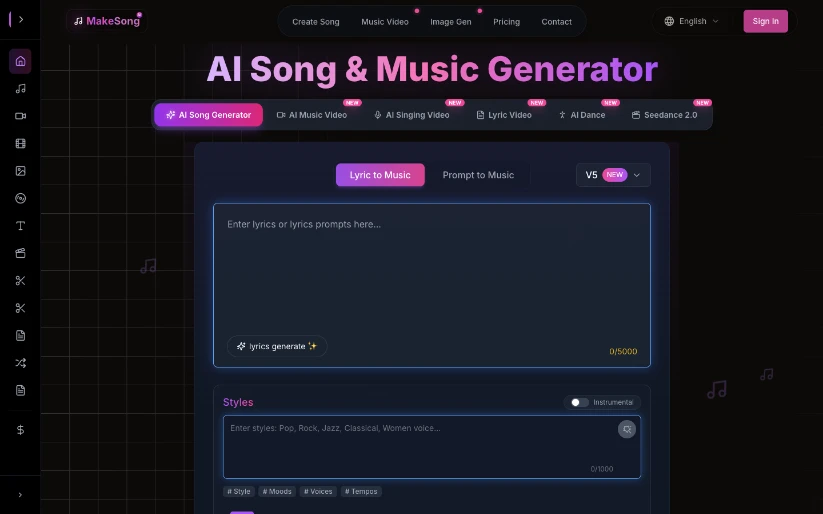 Product screenshot: MakeSong homepage
Features
The platform supports lyric-to-music and prompt-to-music creation, with useful adjacent tools such as AI music video, lyric video, singing video, and style controls. That makes it a practical AI Song Maker for creators who want to test lyrics, generate song drafts, and prepare assets for social content or marketing campaigns.
How to Use
Begin with lyrics if you already have words, or use a descriptive prompt if you only know the genre, mood, or story. After the first generation, review the structure and style, then adjust the prompt or lyrics until the result feels close enough to use as a demo or publishing draft.
Pros
MakeSong is easy to enter, fast to test, and broad enough for creators who need both music and related visual assets. Its biggest advantage is that it keeps the song workflow visible and direct, which helps non-producers move from idea to result quickly.
In everyday use, MakeSong is strongest when the creator already knows the kind of song they want and needs a fast draft. It reduces the empty-page problem by keeping the process centered on lyrics, prompts, style, and output instead of technical setup. That is why it feels more practical for quick demos, campaign songs, and creator content than a general audio experiment tool.
2. AISong
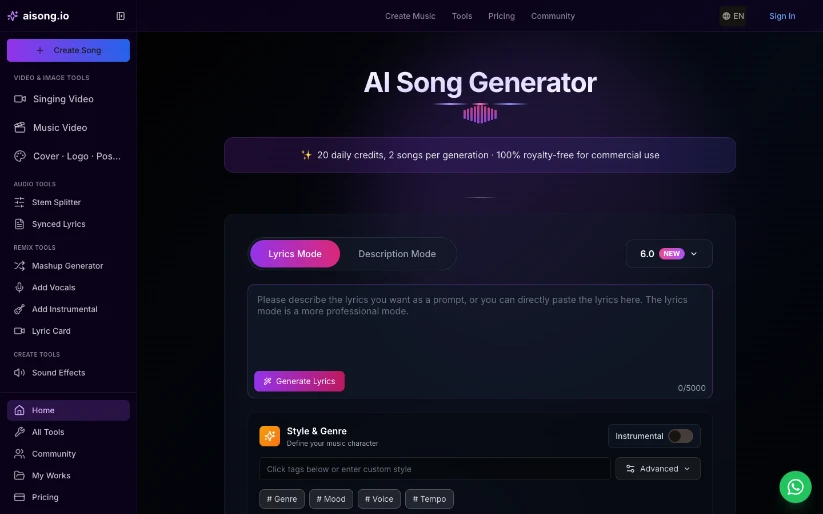 Product screenshot: AISong homepage
Features
AISong includes song creation and a range of related creative utilities, including music video, singing video, synced lyrics, stem splitter, lyric card, sound effects, and remix-oriented tools. This makes it stronger for creators who need more than a single audio export.
How to Use
A typical workflow starts with a lyric, prompt, or style idea. After generating a track, users can refine the direction and move into visual or supporting tools when needed. This makes AISong a useful AI Song Maker for creators who do not want to separate songwriting, audio assets, and video preparation into too many different apps.
Pros
AISong is easy to understand, broad in scope, and friendly to non-producers. It is particularly useful when a creator wants to move from music generation into video-led formats, lyric visuals, or quick publishing assets without rebuilding the project somewhere else.
AISong becomes more valuable after the first track is created because the same idea can move toward lyric assets, music video concepts, singing clips, or short social posts. For a creator who publishes across several formats, that flexibility matters. It keeps the music project connected to the final content instead of forcing users to rebuild the idea in another app.

3. Boomy
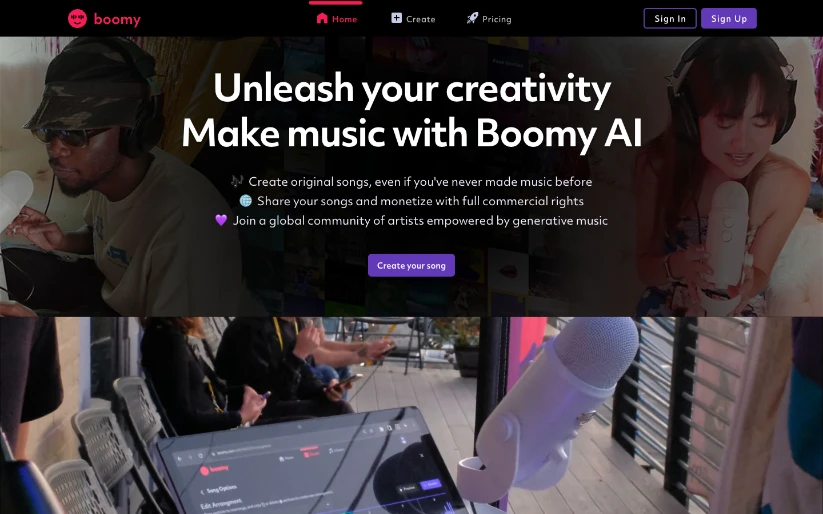 Product screenshot: Boomy homepage
Features
The appeal is simplicity: users can start creating quickly without needing music theory or audio engineering knowledge. It is a useful tool for experimentation and beginner-friendly music publishing.
How to Use
Start with a clear project goal, such as a short video, demo, podcast intro, or branded asset. Then use Boomy to generate a first track, compare the result against your intended mood, and adjust the style or use case until the output feels ready for editing or publishing.
Pros
Boomy is useful because it gives creators a focused way to produce music without building a full studio workflow. Its strongest value is practical speed: users can test ideas, compare results, and decide whether the generated music fits the project before spending time on deeper production.
Boomy is useful because it lowers the barrier to entry. It may not offer the deepest control, but it gives beginners a simple way to understand what AI song creation can do. For users who have never produced music before, that easy first step can be more important than advanced editing features.
4. Loudly
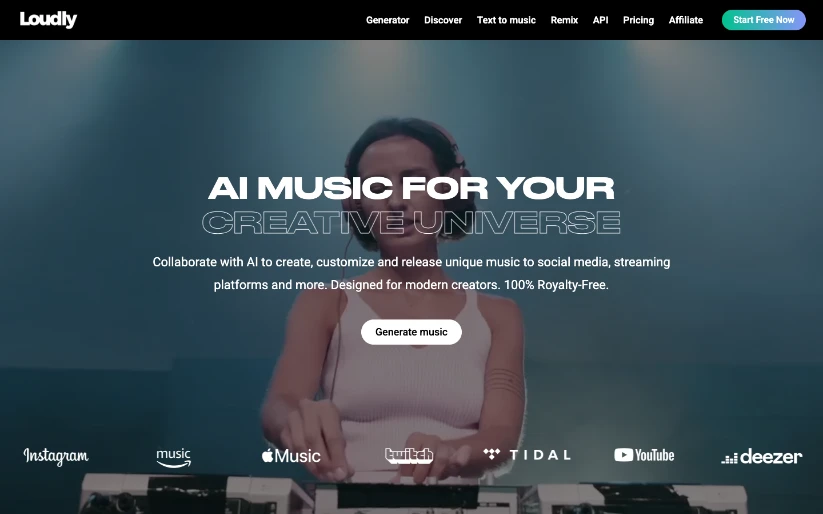 Product screenshot: Loudly homepage
Features
The platform is useful when a creator wants to generate, customize, and release music across online channels. It feels more like a broader AI music workspace than a simple song prompt box.
How to Use
Start with a clear project goal, such as a short video, demo, podcast intro, or branded asset. Then use Loudly to generate a first track, compare the result against your intended mood, and adjust the style or use case until the output feels ready for editing or publishing.
Pros
Loudly is useful because it gives creators a focused way to produce music without building a full studio workflow. Its strongest value is practical speed: users can test ideas, compare results, and decide whether the generated music fits the project before spending time on deeper production.
Loudly is strongest for creators who think in terms of distribution and social use. Its broader music platform approach makes it useful when a track needs to be customized for different publishing contexts. It feels less like a single-purpose song generator and more like a flexible music workspace for online content.
5. AIVA
 Product screenshot: AIVA homepage
Features
AIVA is useful for generating pieces quickly and exploring composition ideas. It can be a better fit for users who think in terms of scores, themes, or instrumental arrangements rather than pop-song prompts.
How to Use
Start with a clear project goal, such as a short video, demo, podcast intro, or branded asset. Then use AIVA to generate a first track, compare the result against your intended mood, and adjust the style or use case until the output feels ready for editing or publishing.
Pros
AIVA is useful because it gives creators a focused way to produce music without building a full studio workflow. Its strongest value is practical speed: users can test ideas, compare results, and decide whether the generated music fits the project before spending time on deeper production.
AIVA is a better fit for structured instrumental work than casual prompt songs. It can be especially useful when the creator needs a composed mood for games, videos, trailers, or narrative projects. Users looking for cinematic or score-like music may find it more relevant than tools focused on pop-style song drafts.
Which AI Music Tool Should You Actually Use?
For lyric-driven songs and quick demos, MakeSong is the most natural first pick because it keeps the creation flow focused. AISong is a close second for users who want music plus extra publishing formats. Boomy, Loudly, and AIVA are worth testing for beginner creation, social music, and instrumental composition, but the most practical song workflow starts with MakeSong or AISong.