How Might Businesses Use Cognitive Biases to Their Advantage?
By SendBridge Team · Published Feb 15, 2026 · 7 min read · Sales
Understanding Cognitive Bias: Definition and Everyday Implications
Cognitive bias is a fascinating concept that shapes human behavior in ways both subtle and profound. Cognitive biases are systematic deviations from rational judgment, where individuals tend to make decisions influenced by their preconceptions, emotions, or environmental cues, rather than objective analysis. The classic definition-"a systematic error in thinking that affects the decisions and judgments that people make"-captures the essence of cognitive bias. For businesses, understanding what is a cognitive bias unlocks opportunities to shape customer experience, craft persuasive marketing, and optimize internal decision-making.
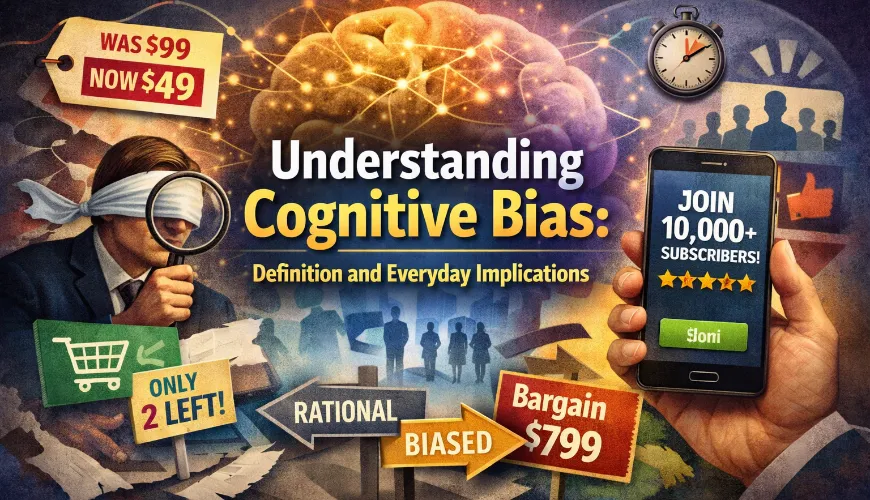
One need only look to consumer behavior to see the footprint of these biases. For instance, the "anchoring effect"-where the first piece of information encountered acts as a reference point-can be seen every time a retailer lists a product as "was $99, now $49." The original price acts as an anchor, making the sale price appear significantly more attractive, even if the value for money remains unchanged. This insight into human psychology is not just academic curiosity; it’s a tool that, when used ethically, can enhance the effectiveness of campaigns, products, and communications.
Leveraging Cognitive Biases in Business: Strategies and Real-World Examples
Businesses have long harnessed the power of cognitive biases, often without explicitly naming them. Consider the scarcity principle, a bias that causes people to place higher value on things that appear limited or rare. E-commerce giants like Amazon routinely use "Only 3 left in stock!" notifications, tapping into the fear of missing out-another bias known as FOMO (Fear of Missing Out). This gentle nudge is often enough to accelerate purchasing decisions and boost conversions.
Another widely used bias is social proof-the tendency to look to others for guidance when uncertain. Displaying customer testimonials, reviews, or "Most Popular Choice" badges leverages this bias, encouraging hesitant shoppers to follow the crowd. In fact, according to a report by Spiegel Research Center, displaying reviews can increase conversion rates by as much as 270%. The persuasive power of social proof extends beyond retail; in B2B settings, highlighting prominent clients or case studies can tip the scales in a company’s favor during negotiations or sales pitches.
Businesses also use the framing effect, where the way information is presented influences decision-making. A subscription service might describe its plan as "Only $1.50 per day" rather than "$45 per month," making the price feel more manageable. Such subtle shifts in framing can increase uptake, reduce cancellations, and drive customer loyalty.
Real-World Example: The Case of the $1,000 Coffee Maker
A classic illustration comes from Williams-Sonoma, a kitchenware retailer. When the company introduced a new, high-end coffee maker priced at $275, sales were lackluster. Instead of slashing the price, they added an even more expensive model-priced at $429-to the lineup. The result? Sales of the $275 machine nearly doubled. Customers now perceived the mid-range option as a bargain, thanks to the contrast effect, another form of cognitive bias. This example showcases how understanding the mental shortcuts customers use can inform product placement and pricing strategies.

Cognitive Biases in Marketing, Product Design, and Team Dynamics
The influence of cognitive bias extends beyond the purchase funnel. In marketing, understanding these psychological shortcuts can drive everything from ad copy to campaign design. The availability heuristic, for instance, refers to the tendency to overestimate the importance of information that comes to mind easily. Marketers might highlight recent awards, trending products, or viral testimonials to ensure their brand stays top-of-mind when customers make decisions.
Confirmation bias-the inclination to search for or interpret information in a way that confirms one’s existing beliefs-is another powerful tool. While caution is required not to mislead, companies can personalize content, offers, or recommendations to align with what customers already like, increasing engagement and satisfaction.
Within organizations, cognitive biases can be double-edged swords. On one hand, they can streamline decision-making and reduce analysis paralysis. For example, using default options-a bias toward sticking with pre-selected choices-can drive adoption of company initiatives, such as enrolling employees in retirement plans unless they opt out. On the other hand, these biases can also lead to groupthink or suboptimal choices if left unchecked. Training teams to recognize and challenge their own cognitive shortcuts fosters better collaboration and innovation.
Practical Tutorials: Applying Cognitive Bias Principles in Business
For business leaders or marketers seeking to harness cognitive biases ethically, here’s a practical approach:
1. Identify Relevant Biases for Your Audience
- Research your target demographic: Are they more likely to respond to social proof, scarcity, or loss aversion?
- Map the customer journey: At what points are decisions most susceptible to bias?
2. Design Experiences with Biases in Mind
- Use scarcity messages for limited-time offers.
- Highlight testimonials and reviews for products requiring trust.
- Frame pricing in relatable terms.
3. Test and Iterate
- A/B test different messages and formats.
- Gather feedback and analyze results.
- Optimize based on data, not assumptions.
4. Maintain Ethical Standards
- Avoid manipulative tactics that could erode trust.
- Ensure claims are truthful and transparent.
In the words of Nobel laureate Daniel Kahneman, "We are blind to our blindness. We have very little idea of how little we know." Embracing this humility allows businesses to use cognitive bias as a tool for positive influence rather than manipulation.
Tutorials and Comparisons: Cognitive Biases versus Rational Decision-Making
It’s essential to recognize the distinction between decisions guided by cognitive biases and those made through rational analysis. While rational decision-making relies on weighing evidence, costs, and benefits, biases bypass logic in favor of mental shortcuts. For businesses, the challenge-and opportunity-lies in blending both: using insights from behavioral science to nudge consumers in beneficial directions, without undermining trust.
To illustrate, compare two approaches to encouraging newsletter sign-ups:
- Rational Approach: Explains the features and benefits of the newsletter in detailed bullet points.
- Bias-Informed Approach: Adds a "Join over 10,000 subscribers!" tagline (social proof), highlights a limited-time bonus (scarcity), and sets the sign-up box as the default option on the homepage (default effect).
In practice, the latter often outperforms the former, not because the product is better, but because the presentation aligns with how the brain naturally processes decisions.
Unique Perspective: The Responsibility of Using Cognitive Biases in Business
It’s tempting to see cognitive biases as mere levers to pull for quick wins. Yet, their power carries a responsibility. Businesses should view cognitive biases not as tricks, but as insights into human nature. The most sustainable organizations use these insights to remove friction, build confidence, and create value for customers. For example, reminders and default options can help users stick to their goals-whether saving money or pursuing healthier habits-rather than pushing them toward unnecessary purchases.
When businesses respect their customers’ intelligence and autonomy, they can turn cognitive biases from potential pitfalls into powerful assets. Consider the increasing focus on ethical design in tech; by prioritizing transparency and user empowerment, companies can differentiate themselves in an era where trust is currency.
Cognitive Biases as Business Superpowers
The question "how might businesses use cognitive biases to their advantage?" is best answered by recognizing the universality of these mental shortcuts. Every decision-whether it's buying a product, choosing a service, or even collaborating with a team-carries the subtle imprint of cognitive bias. Businesses that invest in understanding, applying, and respecting these biases can design experiences that are not only more persuasive but also more humane.
For those eager to explore further, resources like the Behavioral Economics Guide or publications from the Center for Advanced Hindsight at Duke University offer a wealth of insight. And as the digital landscape evolves, companies that skillfully blend psychology, data, and empathy will find themselves uniquely equipped to thrive.
If you’re interested in related strategies for improving decision-making in business, you might explore Common Challenges in Effective Decision-Making or discover how multi-attribute models can enhance clarity in complex choices in Better Decision Making with Multi-Attribute Model. These resources provide further context for understanding the interplay between bias and rationality in the world of business.
Ultimately, the real advantage lies not just in understanding what is a cognitive bias, but in learning to harness it ethically-turning common human traits into uncommon business success.