A Practical Guide to Paying International Suppliers with Virtual Cards
By SendBridge Team · Published Aug 28, 2026 · 5 min read · General
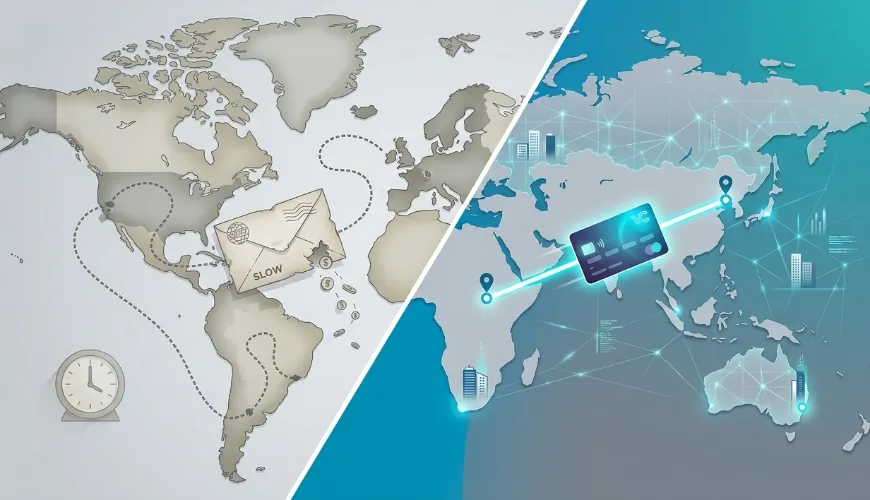
Paying overseas suppliers used to mean two things: a SWIFT wire and a small prayer. The wire would go out, you would lose somewhere between $25 and $80 to fees on each side, the FX margin would quietly take another 1.5 to 3 percent, and three days later the supplier would email asking why the amount that arrived was less than the amount on the invoice. You would explain. They would not love the explanation.
In 2026, that workflow is finally optional for most businesses. Virtual cards have become a credible alternative for a large slice of international supplier payments, and a lot of finance teams are quietly migrating off wires for everything except the very largest invoices.
Why Wire Transfers Are Quietly Costing You More Than You Think
The headline cost of a wire is the bank fee, usually $25 to $40 outbound. That part is annoying but small. The expensive part is the FX spread, which is where banks make most of their money on cross-border payments. A 2 percent spread on a $50,000 invoice is $1,000. Per invoice. If you are paying ten suppliers a month, that adds up to real numbers very quickly.
Then there is the speed. SWIFT settles in two to four days. If your supplier is in Vietnam and you are in the UK, expect the upper end of that range. For services that need to start immediately or goods that ship on payment, those two extra days are not free.
Where Virtual Cards Beat Traditional Payment Rails
Most modern card networks (Visa and Mastercard especially) settle internationally in hours, not days. Virtual cards for cross-border business payments typically run on these rails, which means a payment that would take three days via SWIFT can clear before lunch. FX margins on card payments are usually narrower than what banks charge on wires, often closer to 0.5 percent than 2 percent. And the per-transaction fees are negligible.
There is also a control benefit. A wire goes out and that money is gone. A virtual card can be capped at the invoice amount, locked to a single supplier, and frozen the moment something looks off. If a supplier tries to charge you for a duplicate invoice, the card just declines.

A Walkthrough of the Payment Process
Step 1: Vendor Verification
Before issuing the card, confirm the vendor accepts cards in the first place. Most modern suppliers do. Some traditional manufacturing partners still prefer wires; ask before you assume. For new international vendors, it's worth running a quick check through a business verification platform to confirm who you're actually paying before the money moves. Also confirm which currency they invoice in, because that affects whether you should issue the card in their local currency or yours.
Step 2: Card Issuance and Limits
Issue the card with a hard cap matching the invoice. If the invoice is $4,800, set the limit to $4,800 (or $5,000 with a small buffer for FX rounding). Lock the card to that vendor by merchant ID if your platform supports it. If you have a recurring supplier, create a recurring card with a monthly cap.
Step 3: Currency Selection
If your platform supports multi-currency issuance, pay in the supplier's billing currency. This avoids dynamic currency conversion at the merchant's end, which is where most hidden FX fees come from. If you can only issue in your home currency, that is fine, but expect a slightly worse FX rate.
Step 4: Reconciliation
When the transaction posts, your card platform should attach metadata: vendor name, invoice number, project code, currency, FX rate, and exchange amount. Push that into your accounting software automatically if the integration exists. If not, the export to CSV is usually clean enough that bookkeeping is a five-minute job.
Situations Where Virtual Cards Do Not Work
Honest disclaimer: virtual cards are not a universal replacement for international wires. They work brilliantly for the 80 percent of supplier payments under $50,000. They get awkward above that threshold because card limits start to bite, and supplier processing fees on the merchant side can erode the FX advantage. Some industries (heavy manufacturing, raw materials, anything with letter-of-credit requirements) still settle on wires for legitimate operational reasons.
There are also a handful of countries where card acceptance is genuinely poor for B2B payments. Parts of Africa, certain South Asian markets, and a few CIS countries. In those cases, local rails or wires are still the right answer. Know your supplier list before you commit to a wholesale switch.
Real-World Cost Comparison
Let us run the numbers on a $20,000 quarterly payment to a software development partner in Eastern Europe. Via wire: $35 outbound fee from your bank, roughly $15 intermediary fee, and a 1.8 percent FX spread. Total cost: about $410. Settlement time: three days.
Via a virtual card with a 0.5 percent FX margin and no per-transaction fee: $100. Settlement time: same day. Across a year of quarterly payments, that is a $1,240 difference. Multiply by the number of international suppliers you pay regularly and the math gets compelling fast.
A Few Things to Check Before You Switch
Confirm card acceptance with each supplier first. Check whether your platform supports the currencies you actually need. Make sure your accounting integration handles FX cleanly, because manual FX reconciliation is no fun for anyone. And keep your wire infrastructure live for the 20 percent of payments where it still makes sense. Cross-border payments do not need to be a single-rail decision. They almost never were.