When the Revenue Dashboard Lies: Data Pipeline Hygiene From CRM to Board Report
By SendBridge Team · Published Oct 22, 2026 · 7 min read · Technology

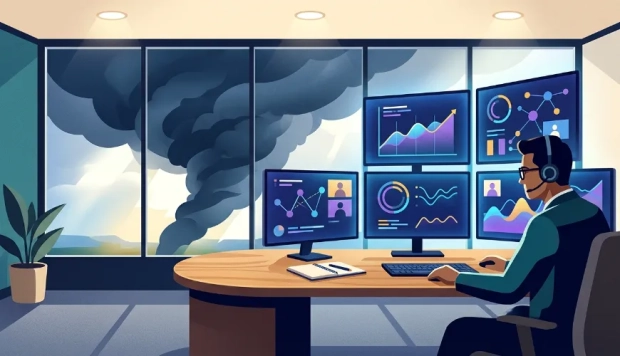
Revenue dashboards sit at the heart of how most companies make decisions these days. Leadership teams lean on these visual reports to track performance, shape strategy, and keep stakeholders in the loop. But what if the numbers staring back at them aren't quite right? Truth is, a lot of organizations are dealing with a quiet problem: revenue figures that look solid on the surface but are actually compromised by messy data pipelines, everything from CRM inputs all the way to the reports that land in front of the board.
Dashboards end up misleading people for a handful of reasons, mismatched data sources, half-finished integrations, or legacy processes that let small errors slip through and multiply as they move downstream. When nobody catches these problems early, leaders end up making calls based on information that's already compromised, and that can mean chasing the wrong strategy or missing real opportunities entirely. Keeping the data pipeline clean and trustworthy isn't just good practice, it's what stands between a dashboard that actually reflects reality and one that just looks like it does.
The numbers back this up too. Deloitte recently found that roughly a third of business leaders, 33 percent, don't fully trust their own revenue reporting because of these kinds of data problems. That's a telling statistic, and it makes the case for treating data hygiene as a priority rather than an afterthought.

Why Data Hygiene Matters in Revenue Reporting
Data hygiene refers to the practice of regularly cleaning, validating, and maintaining data quality throughout its lifecycle. In the context of revenue reporting, this means ensuring that every piece of information flowing from customer relationship management (CRM) systems is accurate, timely, and properly integrated into financial and executive reporting tools.
Poor data hygiene can lead to:
- Duplicate or missing records that skew revenue totals
- Misaligned definitions of revenue between sales and finance teams
- Delays in data synchronization causing outdated reports
- Incorrect attribution of sales or revenue to the wrong segments or products
A recent study found that 40% of organizations experience revenue leakage due to inaccurate sales data, contributing to a significant loss in projected income. This leakage not only impacts the bottom line but also hampers the ability to forecast accurately, with 27% of companies reporting forecast inaccuracies directly linked to poor data quality. Given these risks, companies must prioritize data hygiene as a foundational element of their revenue reporting processes.
The Role of Expert Partners in Data Pipeline Hygiene
Addressing the complexities of data pipeline hygiene requires expertise that spans technology, process design, and organizational alignment. For many companies, partnering with specialized service providers can make the difference between persistent data issues and reliable, actionable revenue insights.
For instance, The KR Group's team have extensive experience helping businesses design and implement reliable data workflows that bridge the gap between CRM systems and executive reporting tools. Their approach focuses on:
- Establishing clear data governance policies
- Automating data validation and error detection
- Aligning sales and finance definitions to ensure consistency
- Monitoring data flows with real-time alerts to catch anomalies early
Engaging such experts can reduce the time spent on manual reconciliation and increase trust in revenue dashboards. Their proven frameworks help organizations identify weak points in the data pipeline and implement scalable solutions that grow with the business.
Common Pitfalls in CRM to Board Report Data Pipelines
The journey of revenue data typically starts in the CRM, where sales activities, deal closures, and customer information are recorded. This data then flows through various stages-data warehouses, analytics platforms, and financial consolidation tools-before culminating in the final revenue dashboard viewed by executives and board members.
Some common pitfalls include:
- Inconsistent Data Entry: Sales reps may enter data differently or omit key fields, leading to discrepancies.
- Integration Breakdowns: Data pipelines involving multiple systems can suffer from synchronization failures or transformation errors.
- Lack of Standardization: Without standardized definitions and processes, revenue figures can be calculated differently across departments.
- Insufficient Validation: Automated checks may be missing or incomplete, allowing erroneous data to slip through.
These issues often compound over time, making it difficult to trace errors back to their source and undermining confidence in reported metrics.
Moreover, a survey by Experian found that 95% of businesses have poor data quality impacting their operations, and 83% of organizations believe that data quality problems have a direct negative impact on revenue.
Leveraging Technology to Strengthen Data Pipelines
Beyond expert consulting, technology solutions play a crucial role in maintaining data hygiene. Advanced platforms can automate the cleansing, transformation, and validation of data as it moves from CRM systems to reporting dashboards.
For example, experts at Link High Technologies offer advanced technological solutions that streamline data pipelines, ensuring that revenue data is accurately captured, transformed, and presented. Their tools emphasize:
- Seamless integration across diverse platforms
- Automated cleansing routines that remove duplicates and inconsistencies
- Scalable architectures that support growing data volumes without degradation
- Intuitive dashboards that enable deeper insights and faster decision-making
By utilizing such technology, organizations can reduce manual errors, accelerate data processing, and maintain consistent revenue reporting standards even as data complexity increases.
Quantifying the Impact of Improved Data Hygiene
The benefits of maintaining a clean data pipeline extend beyond just accurate reporting. Organizations that invest in data hygiene often see measurable improvements in operational efficiency and financial performance.
According to a recent survey, companies with mature data quality practices report a 20% increase in forecast accuracy and a 15% reduction in sales cycle time. Additionally, organizations that improve data quality can see up to a 30% increase in revenue growth due to better customer insights and sales targeting.
Moreover, clean and reliable data enables better resource allocation, improved customer targeting, and more effective risk management. By eliminating the guesswork caused by unreliable data, leadership teams can confidently execute growth strategies and respond rapidly to market changes.
Best Practices for Sustaining Data Pipeline Hygiene
To maintain ongoing data integrity from CRM to board report, organizations should consider the following best practices:
- Implement Regular Audits: Schedule periodic reviews of data quality to identify and remediate issues proactively.
- Define Ownership and Accountability: Assign clear roles for data stewardship across departments to ensure responsibilities are met.
- Leverage Automation: Use automated validation, cleansing, and monitoring tools to reduce manual effort and human error.
- Standardize Data Definitions: Align terminology and calculation methods across sales, finance, and analytics teams.
- Train and Empower Users: Educate staff on the importance of data accuracy and provide guidelines for consistent data entry.
- Foster Cross-Functional Collaboration: Encourage open communication between IT, sales, finance, and analytics to quickly resolve discrepancies.
Embedding these practices into the organizational culture is essential for sustaining high-quality data pipelines that empower accurate revenue reporting.
Furthermore, adopting a continuous improvement mindset allows organizations to adapt their data hygiene strategies as systems evolve and business needs change. This adaptability is crucial in today's fast-paced market environment.
Trust but Verify Your Revenue Data
Revenue dashboards are indispensable tools for business leadership, but their value hinges on the quality of the underlying data. Without rigorous data pipeline hygiene from CRM systems to board reports, organizations risk making critical decisions based on misleading information.
By understanding common pitfalls, leveraging expert partners like , and adopting best practices for data management, businesses can ensure their revenue dashboards tell the true story of their performance. In doing so, they lay the groundwork for smarter strategies, stronger growth, and greater confidence in every boardroom discussion.
In an era where data is king, the integrity of your revenue data pipeline is the crown jewel. Don't let flawed dashboards lead you astray-invest in data hygiene to make your revenue reports a trusted source of truth.