Experts or Creators? The Surprising Marketing Showdown That Actually Drives Results
By SendBridge Team · Published Jun 04, 2026 · 10 min read · Marketing
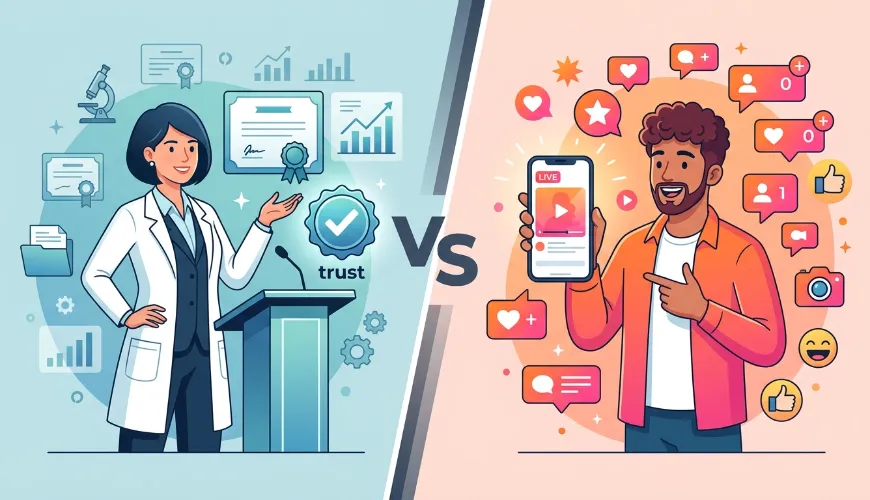
If you have ever compared KOL marketing vs influencer marketing, you already know the internet loves turning this topic into a cage match. One side says key opinion leaders bring trust, authority, and high-intent buyers. The other side says influencers bring reach, engagement, and the kind of social proof that gets products moving before your coffee gets cold. The truth is less dramatic, more useful, and far more profitable.
Here is the short version: neither service wins by default. The better option depends on what you are selling, who you are selling it to, and where your audience is in the buying journey. That is why brands that obsess over follower counts alone usually waste money, while brands that match the right voice to the right offer tend to squeeze more ROI out of the same budget. This same logic applies when choosing between platforms like Yotpo Loyalty vs DailyKarma to determine which incentive structure drives the most meaningful engagement for your specific brand.
In this guide, we are going to break down KOL marketing vs influencer marketing in plain English. You will see what each service actually does, where each one shines, and which one tends to deliver better results for awareness, trust, conversions, and long-term brand equity. By the end, you will know exactly which model fits your business instead of choosing based on hype, jargon, or a LinkedIn post written by someone with "ninja" in their bio.
What Is KOL Marketing, Really?
KOL marketing is short for key opinion leader marketing. It involves working with recognized experts, specialists, or trusted authorities who have influence because of their knowledge, credentials, or real-world experience. According to Shopify, KOL marketing means collaborating with industry experts to promote products or services, and those experts can include scientists, journalists, researchers, CEOs, and other professionals with niche authority.
That distinction matters more than most marketers realize. A KOL does not need a massive social media following to move the needle. Their influence often comes from expertise first and audience size second, which is why their endorsement can feel more like trusted advice and less like an ad wearing a trench coat.
Flooencer makes this difference even clearer in a B2B context. It defines KOL marketing as a strategy centered on authority and qualifications rather than follower counts, especially in categories where buyers care about credibility before they open their wallets.
What Is Influencer Marketing?
Influencer marketing is the better-known cousin in this family. It usually involves creators who build audiences through content, personality, relatability, entertainment, lifestyle appeal, or community engagement. Shopify notes that influencers typically earn revenue through content and often owe most of their fame to social media rather than to formal expertise.
That does not make influencer marketing "shallow." Far from it. The best influencers are excellent communicators, strong storytellers, and highly skilled at making products feel relevant in everyday life. They are often better than KOLs at grabbing attention, creating shareable moments, and making audiences care fast.
LoudCrowd points out that influencers build audiences through their online presence and relatable content, while KOLs build trust through professional background and subject-matter authority. It also notes that the ideal partnership can sometimes blend both worlds: a creator with real niche credibility and strong content skills. That hybrid model, by the way, is where a lot of smart brands are quietly winning.
KOL Marketing vs Influencer Marketing: The Real Difference
On paper, the difference sounds simple. KOLs bring expertise, and influencers bring reach. In practice, the difference shows up in why people pay attention.
People follow KOLs because they want informed guidance. They see the person as someone who has done the work, earned the credentials, or spent years mastering the topic. Flooencer highlights that a KOL's authority comes from hands-on work, published research, speaking engagements, or leadership roles, while influencers build trust through storytelling, relatability, and entertainment value.
That changes everything downstream. A skincare brand working with a dermatologist gets credibility. A skincare brand working with a beauty creator gets lifestyle relevance. Both can work, but they work for different reasons, at different stages, and with different buyer psychology in play.

Which One Builds More Trust?
If your goal is trust, KOL marketing usually has the edge. Shopify specifically emphasizes that KOLs are trusted authority figures and that their recommendations may carry more weight than standard paid influencer posts because consumers take expert credibility seriously. LoudCrowd makes the same point, noting that KOL recommendations feel like trusted suggestions from authority figures rather than just another advertisement.
This matters most when buyers perceive risk. If a product is expensive, technical, health-related, financial, or professionally important, buyers want confidence before convenience. In those scenarios, trust is not a nice-to-have. It is the entire game.
That said, trust is not a monopoly. Influencers can build strong trust too, especially with loyal communities that value authenticity and consistency. The difference is that influencer trust is often personal and emotional, while KOL trust is more professional and evidence-based. One feels like a friend saying, "I use this." The other feels like an expert saying, "Here is why this works."
Which One Drives More Reach and Engagement?
If your goal is reach, influencer marketing often wins. Influencers are built for attention. They understand platforms, formats, trends, hooks, editing, and audience behavior in a way that many experts simply do not.
This is where marketers get seduced by vanity metrics, and honestly, it is not hard to see why. A creator with strong engagement can put your product in front of thousands or millions of people quickly, and the best ones can package a brand message into something that does not feel like brand messaging at all. That is marketing sorcery, and when it works, it works.
Still, reach without relevance is just expensive noise. If an influencer gets views but the audience has no reason to trust the recommendation or no real need for the product, those impressions may look good in a report and do almost nothing in your revenue dashboard. So yes, influencer marketing tends to win on reach. But reach is only a great metric if it leads to something besides applause.
Which One Converts Better?
This is the part where marketers want a neat answer, and the annoying truth is: it depends on the offer. For complex or high-consideration purchases, KOL marketing often converts better because it reduces doubt. Flooencer emphasizes outcomes such as trust acceleration, higher conversion, improved lead quality, and stronger pipeline influence, especially in longer B2B sales cycles.
For impulse-friendly, visually driven, or trend-sensitive products, influencer marketing can convert extremely well. If the offer is simple, the product is easy to understand, and the content is entertaining enough to drive immediate action, influencers can turn attention into sales fast. Fashion, beauty, accessories, snacks, consumer apps, and lifestyle products often perform well in this lane.
In short, KOLs usually help people say yes with confidence. Influencers usually help people say yes with momentum. Confidence tends to win in high-stakes buying decisions, while momentum shines in lower-friction consumer purchases.
Which Service Delivers Better Results for Different Goals?
If your goal is brand credibility, KOL marketing usually delivers better results. Shopify and LoudCrowd both stress the role of expert endorsement in making brands feel legitimate and trustworthy. That is especially useful in healthcare, finance, B2B software, education, wellness, and premium products where audiences want reassurance before they buy.
If your goal is brand awareness, influencer marketing often performs better. Influencers are built to create content that spreads, gets saved, gets shared, and gets remembered. They are usually better at volume and velocity, which makes them a strong fit for launches, promotions, trend campaigns, and social-first growth.
If your goal is lead quality, KOL marketing tends to pull ahead. It specifically notes that KOLs provide targeted access to highly specific audiences and can accelerate trust among better-qualified prospects. In plain English, you may get fewer clicks, but more of those clicks can actually matter.
If your goal is content production at scale, influencer marketing has the advantage. Influencers are natural content engines. They can generate a steady stream of social assets, product demos, testimonials, short-form videos, and platform-native creative that you can often repurpose across channels.
The Smartest Brands Do Not Choose One
Here is where the conversation gets more interesting. The best brands often do not treat KOL marketing vs influencer marketing as an either-or decision. They use both, because each service solves a different problem.
A KOL can validate the product. An influencer can make it visible. A KOL can build authority at the consideration stage. An influencer can drive discovery at the awareness stage. Put those together, and you get a fuller funnel instead of a one-note campaign.
LoudCrowd hints at this overlap by noting that some creators blend KOL-style credibility with influencer-style reach. That is the sweet spot. And if you layer in affiliate or performance-based tracking, you can often turn both services into more measurable growth channels instead of praying over engagement screenshots.
How to Choose the Right Service for Your Brand
Start with the product. If your product needs trust, explanation, or professional proof, lean toward KOL marketing. If your product sells best through aspiration, storytelling, or visual demonstration, lean toward influencer marketing.
Next, look at the buyer. Are they cautious or impulsive? Are they comparing options or casually browsing? Are they making a career-impacting decision or buying something fun at 11:47 p.m. because a creator said, "Okay, but obsessed"? Your buyer's mindset should shape your channel strategy more than whatever tactic is trending this week. When customers face high-stakes decisions with significant financial or personal risk, they often exhibit complex buying behavior that requires a more deliberate and trust-focused approach to marketing.
Finally, look at the metric that actually matters. If you care about pipeline quality, credibility, and high-intent conversions, KOL marketing may deliver better results. If you care about engagement, awareness, social proof, and fast campaign momentum, influencer marketing may outperform. The wrong move is not picking the "worse" service. The wrong move is choosing one without being clear on what result you are trying to buy.
KOL or Influencer: Who Actually Wins?
So, KOL marketing vs influencer marketing: which service delivers better results? If the goal is trust, authority, and better-qualified conversions, KOL marketing usually wins. If the goal is reach, engagement, and social buzz, influencer marketing often takes the trophy.
But the best answer is not sexy. It is strategic. Choose KOL marketing when credibility is the lever. Choose influencer marketing when attention is the lever. Use both when you want a campaign that does not just get seen, but actually gets believed.
That is how smart brands stop arguing over labels and start getting results.