Best Display Ad Networks for Publishers in 2026
By SendBridge Team · Published Jun 15, 2026 · 5 min read · Marketing
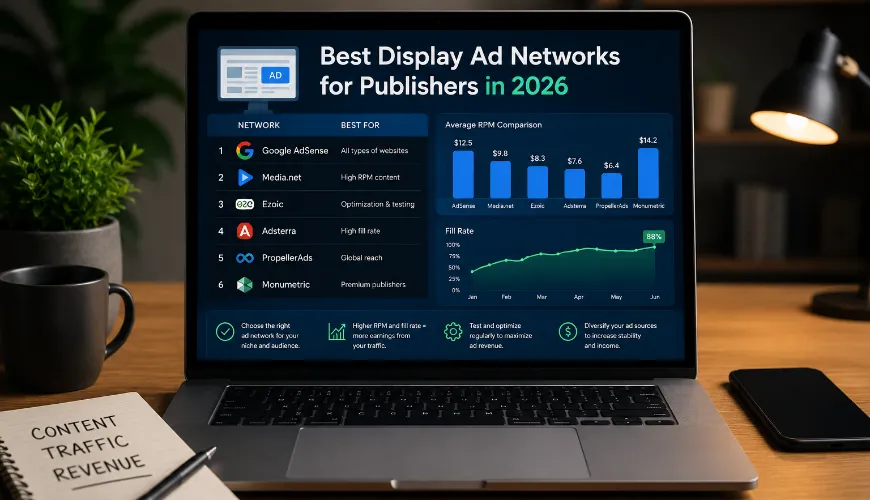
Choosing the right ad network comes down to more than CPM rates on paper. Fill rate, payment terms, format variety, and traffic compatibility all shape what a site actually earns. A network paying $15 CPM that fills 50% of impressions loses to one paying $9 CPM with 90% fill, and the math is not subtle. This guide gets into what separates a network worth using from one that just looks good on a comparison chart.
What Makes a Display Ad Network Worth Using
Before comparing networks, it helps to know what to compare. CPM is the number everyone leads with, but it rarely tells the full story.
The variables that move revenue:
- Fill rate: how often an ad slot serves an ad rather than leaving inventory empty;
- Payment terms: net-7, net-15, or net-30 affects cash flow significantly for smaller publishers;
- Minimum traffic requirements: some networks set thresholds of 100,000 monthly sessions or more;
- Format support: networks covering display, pop under ads, and native give publishers more options in one place;
- Geographic demand: strong US and UK advertiser pools push CPM higher for publishers with that audience.
Publishers who buy popunder traffic from Adsterra as a dedicated format tend to see RPM move in the right direction - but a network that scores well across all five is genuinely hard to find. That's why it's worth testing candidates one at a time. Only a clean, isolated test shows whether a network actually delivers or just looks good on paper.
A network that scores well across all five is genuinely hard to find. That's why it's worth testing candidates one at a time. Only a clean, isolated test shows whether a network actually delivers or just looks good on paper.

How Display Networks Compare on Key Metrics
The numbers below are typical ranges, not guarantees. Performance shifts by niche, traffic source, and placement quality.
| Network Type | Avg CPM (US) | Fill Rate | Min Traffic | Format Options |
|---|---|---|---|---|
| Premium display networks | $8-$30 | 60-75% | 100K+ sessions | Display, native |
| Mid-tier display networks | $4-$12 | 70-85% | 10K+ sessions | Display, push |
| Popunder-focused networks | $3-$15 | 80-95% | Low or none | Pop under ads, display |
| Self-serve platforms | $2-$18 | 75-90% | None | Mixed formats |
Popunder-focused networks and self-serve platforms tend to have the lowest entry barriers and the highest fill rates. For publishers still growing traffic, that combination is more practical than chasing premium networks with requirements they can't meet yet.
Why Format Mix Matters More Than Network Choice
Running only display banners is leaving inventory on the table. Popunder ads draw from a different advertiser pool and hold fill rates that display-only networks rarely match. Publishers who test popunder ads as a dedicated format consistently report higher overall RPM than those who never move beyond display.
For example, a US tech site earning $7 RPM from display banners switched to a self-serve platform with popunder support. After a 30-day test, RPM rose to $11. Testing the new format in isolation made it clear where the gain came from and made the result repeatable.
How to Evaluate and Switch Ad Networks
Most publishers pick a network once and stay out of inertia. A more deliberate approach:
- List what the current network actually delivers: CPM by niche, fill rate, and payment schedule;
- Check minimum traffic requirements on shortlisted alternatives before signing up;
- Compare format support: networks that carry pop under ads alongside display make it easier to run a clean format test without opening a second account;
- Request a test tag and run the new network on two or three pages for 14 days, not the whole site;
- Compare eCPM and fill rate against the same pages on the existing network;
- Factor in payment terms: a network paying net-7 is worth more to a small publisher than one paying net-30 at a slightly higher CPM.
Adsterra is a reasonable starting point: display and popunder ads in one account, which cuts down on the number of dashboards to watch.
What to Prioritize When Choosing a Network
Publishers at different stages need different things. Sites under 10,000 monthly sessions should focus on networks with no traffic minimums and strong fill rates. Mid-size publishers with consistent earnings should weight CPM quality and payment reliability. Larger sites have the leverage to be picky about premium demand.
At every stage, testing popunder ads as a dedicated format is worth the 30 days it takes to get a clean read. The advertiser demand is there. Isolating the test is what turns a result into something repeatable.
FAQ
Can a publisher use multiple display ad networks at once?
No, it is not recommended. When networks overlap, it becomes difficult to understand which one is actually driving performance and why fill rate or CPM fluctuates. Testing one network at a time gives you cleaner data and a clearer picture of its real impact.
Do popunder ads work alongside standard display units?
They operate independently. Pop under ads open behind the browser window and don't interfere with display placements on the page.
What's a realistic timeline to see results after switching networks?
Two to four weeks gives enough data for a fair read. Shorter windows can mislead, especially when traffic volume shifts week to week.