How AI-Driven Audio Infrastructure is Redefining Digital Engagement
By SendBridge Team · Published Apr 07, 2026 · 6 min read · Technology
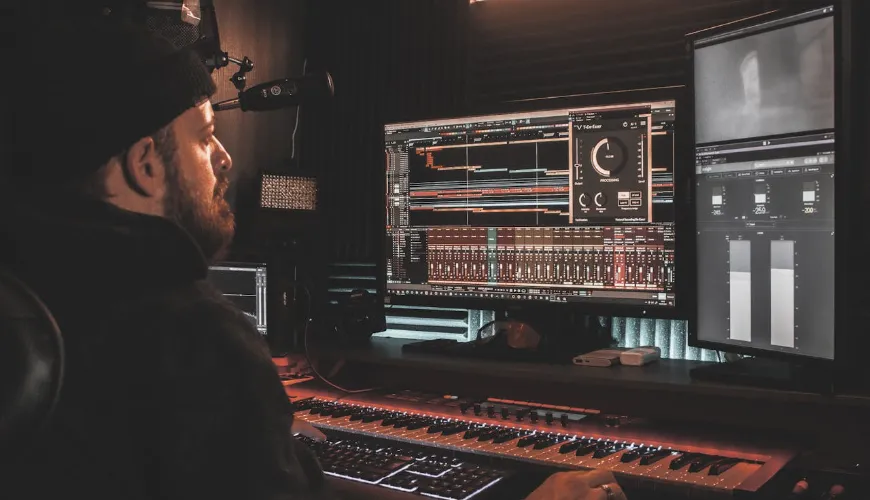
In the current digital ecosystem of 2026, the primacy of text and static imagery is being challenged by a resurgent medium: sound. From the rise of immersive podcasts to the integration of high-fidelity audio in automated marketing, the "auditory layer" of the internet is expanding at an exponential rate. However, for many enterprises and independent creators, the infrastructure required to produce professional-grade audio has historically been a significant barrier to entry.
The traditional workflow-hiring composers, booking voice talent, and navigating complex licensing agreements-is often too slow and too costly for the rapid-fire demands of modern digital communication. This is where Tad AI has stepped in, providing a robust, cloud-based engine that democratizes the creation of professional audio assets through sophisticated generative intelligence.
1. The Infrastructure of Sound: Beyond Simple Automation
When we discuss "AI Music," the conversation often lingers on the novelty of a machine "composing" a melody. However, for the users of the Tad AI Music Generator, the value proposition is far more structural. It is about providing a reliable, scalable infrastructure for AI Music Generation that integrates seamlessly into a professional workflow.
One of the most critical breakthroughs in this space is the expansion of generation limits. While early-stage AI audio tools were limited to short, 30-second loops, Tad.ai has pushed the boundary to 8 minutes. This duration is not arbitrary; it is the "sweet spot" for professional content. An 8-minute track allows a filmmaker to score an entire scene, a podcaster to maintain a consistent background "bed" for an entire segment, and a marketer to create a long-form narrative for a brand documentary.
2. Global Communication and the Multilingual Edge
In a globalized economy, the ability to communicate across linguistic borders is a competitive necessity. For digital platforms like Sendbridge, which facilitate global reach, the integration of multilingual audio is the next logical step in user engagement.
Tad.ai supports vocal performances and lyric generation in over 50 languages. This goes beyond simple translation; it involves the AI understanding the phonetic nuances, rhythmic cadences, and emotional inflections of languages ranging from Mandarin and Spanish to Japanese and French. For a global brand, this means the ability to produce a localized campaign for dozens of regions simultaneously, ensuring that the "voice" of the brand remains consistent while speaking the local tongue of the consumer.
3. The Synergy of Music and Voice: A Unified Ecosystem
While music provides the emotional backdrop, the "Human" element of audio communication often relies on the spoken word. This is why the platform’s Text-to-Speech (TTS) capabilities are just as vital as its musical engine.
Modern creators are no longer looking for isolated tools; they are looking for ecosystems. By combining a bespoke 8-minute soundtrack with high-fidelity, natural-sounding narrations, a creator can build a complete audio experience within a single dashboard. The platform offers a diverse library of vocal personas-ranging from authoritative and professional to warm and narrative-allowing the user to match the "timbre" of the voice to the specific intent of the message.

4. The "Library" as a Collaborative Community
A common critique of AI tools is that they can feel isolating. Tad.ai counters this by positioning its Library as a vibrant social hub. This is not merely a private storage locker for your files; it is a collaborative space that mirrors the "open-source" spirit of modern tech development.
The Home Page as Inspiration
The Tad.ai home page serves as a live gallery of what is possible. By browsing the creations of others, users can find inspiration for their own projects. It acts as a "benchmark" for quality, allowing new users to see how specific genre fusions-such as "Cinematic Orchestral" mixed with "Lo-Fi Beats"-actually sound when executed by the engine.
Favoriting and Curation
The ability to favorite songs and narrations created by the community transforms the platform from a tool into a social network. Professionals can curate their own "inspiration boards" within their library, keeping track of styles they wish to emulate or reference in future projects. This social layer accelerates the learning curve for new creators, as they can "reverse-engineer" successful tracks by observing the prompts and styles used by the community.
5. Precision Control: The Smart and Custom Paradigms
To serve a diverse user base, the platform utilizes a dual-mode workflow that balances ease of use with surgical precision.
The Smart Mode: Rapid Prototyping
For the professional who needs high-quality output on a deadline, the Smart Mode uses natural language processing to turn simple descriptions into complex audio. If a user needs "A high-energy, futuristic electronic track for a tech product launch," the AI handles the music theory, arrangement, and mixing instantly.
The Custom Mode: The Producer's Workbench
For those who require granular control, the Custom Mode offers a suite of advanced features:
- Lyric Input: Users can provide up to 3,000 characters of their own lyrics, dictating the narrative and structure of the song.
- Reference Audio: Perhaps the most powerful tool for professionals, this allows a user to upload a snippet of an existing sound or melody. The AI then analyzes the "DNA" of that reference-its tempo, key, and instrumentation-to generate an original, royalty-free track that fits perfectly within that stylistic parameters.
- Style Selection: With a library of 375+ styles, the permutations for creative output are virtually infinite.
6. The Future of the "Passion Economy"
The rise of platforms like Tad.ai is a primary driver of what economists call the "Passion Economy." We are seeing a new generation of "Audio Entrepreneurs" who are building side-hustles or full-time careers by populating the global demand for sound.
These creators are using ChatGPT to generate lyrical concepts, Tad.ai to produce the high-fidelity songs, and then distributing those assets to Spotify, YouTube, and specialized stock audio marketplaces like Pond5. By selling bespoke birthday songs, personalized jingles for streamers, or background music for indie games, they are proving that the barrier to entering the music industry has been permanently dismantled.
7. Sound as the New Frontier
As we look toward the future of digital infrastructure, it is clear that audio will play an increasingly central role. Whether it is through the deployment of multilingual voiceovers or the creation of unique, 8-minute musical scores, the ability to generate original sound is becoming a fundamental digital skill.
Tad AI represents more than just a technological advancement; it represents a cultural shift. By providing an ecosystem where community, creativity, and high-end technical specs-like 50+ language support and audio referencing-coexist, it allows anyone to become a composer, a narrator, and a storyteller.
The era of "stock" assets is fading. In its place, we are seeing the rise of Text-to-Music as a ubiquitous form of communication. For the readers of Sendbridge-those at the forefront of digital delivery and engagement-the message is clear: the future is not just something to be seen; it is something to be heard.
Unlock the full potential of your digital story. Explore the Tad AI Music Generator and join the community of creators today.