How to Improve Email Marketing & Social Media Engagement Using Automation Tools
By SendBridge Team · Published Oct 16, 2026 · 9 min read · Marketing

In 2026, the digital world is moving at a speed that manual processes simply can't match. If you are still manually uploading every tweet or hand-segmenting your email lists, you aren't just losing time, you're losing market share. Manual marketing leads to content gaps, where your brand goes silent because you got busy, creating a disjointed experience for your followers.
The Synergy Between Email and Social Media
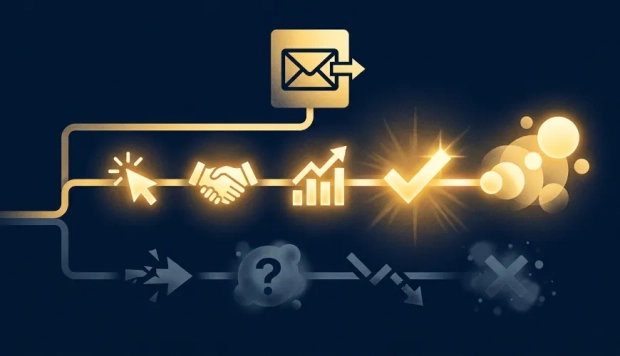
Think of social media as your handshake and email as your living room. Social media is where you meet people and build awareness; email is where you nurture deep relationships. Automation tools act as the bridge between these two, ensuring that a lead generated on Instagram doesn't get lost in the shuffle but is instantly welcomed into your email ecosystem. Once you have established that initial connection, you might need to learn how to find someone's email to continue the conversation in a more private and direct setting.
Before moving social audiences into automated campaigns, teams need reliable data about the people and content driving engagement. Social media data infrastructure can provide normalized public profiles, posts, comments and engagement across several platforms, while authenticated connections add creator-authorized audience demographics, reach and performance metrics for deeper segmentation.
Driving Conversions With Email Marketing Automation
Email remains the highest-ROI channel in digital marketing, but its true power lies in its ability to deliver the right message at the right moment. Automation allows you to move away from generic blasts and toward personalized experiences that respond to user behavior.
Beyond the Newsletter: Segmented Drip Campaigns
The "one-size-fits-all" newsletter is dead. Automation allows you to create "Drip Campaigns", a series of emails sent based on specific actions. If a user downloads a guide on "SEO," they should automatically receive a series of emails about search engine optimization, not generic marketing tips.
Personalization at Scale: Using Dynamic Content Blocks
Dynamic content allows you to change parts of an email based on the recipient's data. An automated email can show different product recommendations to a customer in New York than it does to one in London, all within the same automated workflow.
Behavioral Triggers: Re-engaging Ghost Subscribers
If a subscriber hasn't opened an email in 30 days, an automated re-engagement trigger can kick in. This might send a "We miss you" discount code or a survey to ask what content they'd prefer, effectively cleaning your list and boosting your deliverability rates.
Top 7 Automation Tools for 2026
Not all tools are created equal. The right tech stack should feel like an extension of your team, not an extra burden to manage. We've curated a list of the most effective platforms available today, ranging from social-first managers like Social Champ to e-commerce giants, to help you find the perfect fit for your workflow.
1. SocialBee
SocialBee stands out for its ability to maximize the life of your content. Its category-based scheduling engine lets you group posts into themes like "Tips," "Case Studies," or "Promos" and set cadence rules, so your evergreen content keeps cycling through the queue without manual re-uploading. Beyond scheduling, it includes AI-powered caption writing, a unified content calendar, and concierge services for teams that want done-for-you posting, making it one of the most powerful Buffer alternatives for creators and small agencies that rely on evergreen content libraries.
2. ActiveCampaign
ActiveCampaign goes far beyond simple newsletters by treating every customer interaction as a trigger for personalized automation. Its site tracking and event monitoring engine watches what users do across your website, social bios, and landing pages, then fires off contextual email sequences based on those specific actions. For example, if a user clicks a particular link in your social media bio, ActiveCampaign can automatically tag that contact, segment them into a behavioral audience, and drop them into a tailored nurture sequence designed around that exact interest. Beyond automation, its built-in CRM, predictive sending, and conditional content features let you orchestrate cross-channel journeys that adapt in real time to user behavior, making it one of the most powerful Mailchimp alternatives for businesses that want marketing and sales data unified under a single workflow.
3. Buffer
Buffer is the ideal solution for small teams or solo entrepreneurs who need a clean, distraction-free interface that doesn't bury core features behind enterprise complexity. Its strength lies in its simplicity - a fast, intuitive scheduler with transparent per-channel pricing - and its standout Buffer Start Page, a micro-landing page builder that helps you bridge the gap between social traffic and email sign-ups without needing a separate website. Beyond scheduling, Buffer now includes AI-assisted caption writing, an idea hub for capturing inspiration, and engagement tools for managing comments and replies from a single dashboard, making it one of the most popular Planable alternatives for creators and lean teams who value clarity over feature bloat.
4. Klaviyo
For online retailers, Klaviyo is the brain of the operation, purpose-built to turn storefront data into revenue-generating automation. It specializes in data-driven workflows that pull information directly from your e-commerce platform - Shopify, BigCommerce, WooCommerce, or Magento - to trigger hyper-relevant messages tied to browsing behavior, cart activity, purchase history, and customer lifetime value. Klaviyo also lets you synchronize your social media advertising with your email and SMS efforts, building unified audiences that follow customers across Meta, TikTok, and Google ads. Beyond automation, its predictive analytics surface churn risk, expected next order date, and high-value segments, making it one of the most powerful Mailchimp alternatives for DTC brands that treat customer data as their primary growth lever.
5. Sprout Social
Sprout Social is built for organizations that prioritize data-backed decision-making and need reporting that holds up in front of leadership. While it handles scheduling, publishing, and engagement beautifully through its Smart Inbox and content calendar, its real power lies in enterprise-level reporting that turns social activity into business intelligence. It provides deep insights into audience demographics, sentiment analysis, competitor benchmarking, and team performance, all exportable into white-labeled reports ready for client or executive review. Beyond analytics, Sprout's social listening, AI-assisted message routing, and CRM-style contact histories make it one of the most polished Hootsuite alternatives for mid-market and enterprise teams that need scale, governance, and insight in equal measure.
6. Agorapulse
Agorapulse stands out as an all-in-one command center for teams that need more than just scheduling. Its unified social inbox consolidates DMs, comments, mentions, and reviews across every connected channel into a single zero-inbox workflow, while built-in social listening tracks brand mentions and competitor activity in real time. Beyond publishing, its AI-powered OwlyWriter assists with caption generation and content repurposing, and the platform's team collaboration features - approval workflows, shared calendars, and assignable tasks - make it one of the most powerful Sprout Social alternatives for mid-sized agencies that prioritize engagement velocity and reporting depth.
7. Hootsuite
Hootsuite remains the veteran of social media management, built for brands and agencies that juggle dozens of accounts across every major network. Its visual content calendar and bulk scheduler let you map out months of content in a single view, while OwlyWriter AI generates captions, hashtags, and post ideas on demand. Beyond publishing, Hootsuite delivers optimal send-time recommendations based on your audience's behavior, a unified social inbox for managing conversations at scale, and customizable analytics templates that turn raw engagement data into board-ready reports, making it one of the most established Buffer alternatives for enterprise teams that need depth over simplicity.
The Integration: How to Connect Social and Email Tools
For most businesses, social media and email marketing end up living in completely separate worlds. One team posts on Instagram, another sends out newsletters, and the two rarely compare notes. That's a missed opportunity, because the real value shows up when these channels start talking to each other.
Think of it as a loop: social media is great at getting new people in the door, while email is where you actually build the relationship over time. Connect the two and a casual follower can move from "just saw your post" to "opened your last five emails" without you lifting a finger each time.
Teams that also use direct messaging can add a WhatsApp sender to the workflow, helping them extend campaigns beyond email and social media while keeping outreach organized.
Sync Social Data With Your CRM
Once your social tools are feeding data into your email CRM, you start to see patterns you'd otherwise miss. You'll notice that some of your email subscribers aren't just on your list - they're also the people liking, sharing, and commenting on everything you post. Those are your most valuable contacts, and they deserve to be treated differently. Instead of sending them the same generic newsletter as everyone else, you can give them early access to launches, exclusive offers, or a simple thank-you that acknowledges they've been paying attention. People notice when they're recognized, and that recognition is often what turns a quietly loyal customer into someone who actively recommends you to others.
Use Email to Boost Social Proof
Email and social can also reinforce each other in a more deliberate way. A good example: set up an automated email that goes out about a week after someone makes a purchase - enough time for them to actually use the product - asking them to share a photo on Instagram with your hashtag. Some won't bother, but the ones who do are creating authentic content you didn't have to make yourself. From there, your social scheduling tool can pull those customer posts back into your own feed, so real people vouching for you become part of what new visitors see first. Over time this becomes close to self-sustaining: customers post, you reshare, new prospects see the proof, and some of them eventually become customers who post too.
Automation Frees You to Be More Human
The goal of automation isn't to replace the human element of your marketing; it's to protect it. By offloading the repetitive tasks of scheduling, segmenting, and cross-posting to sophisticated tools, you reclaim the mental bandwidth needed to be creative. In 2026, the brands that win are not the ones posting the most, but the ones providing the most consistent, relevant value. The tools are ready; it's time to let them work for you. To maintain this consistency across your remote workforce, you should also implement reliable SOP software tools for remote sales and marketing teams.